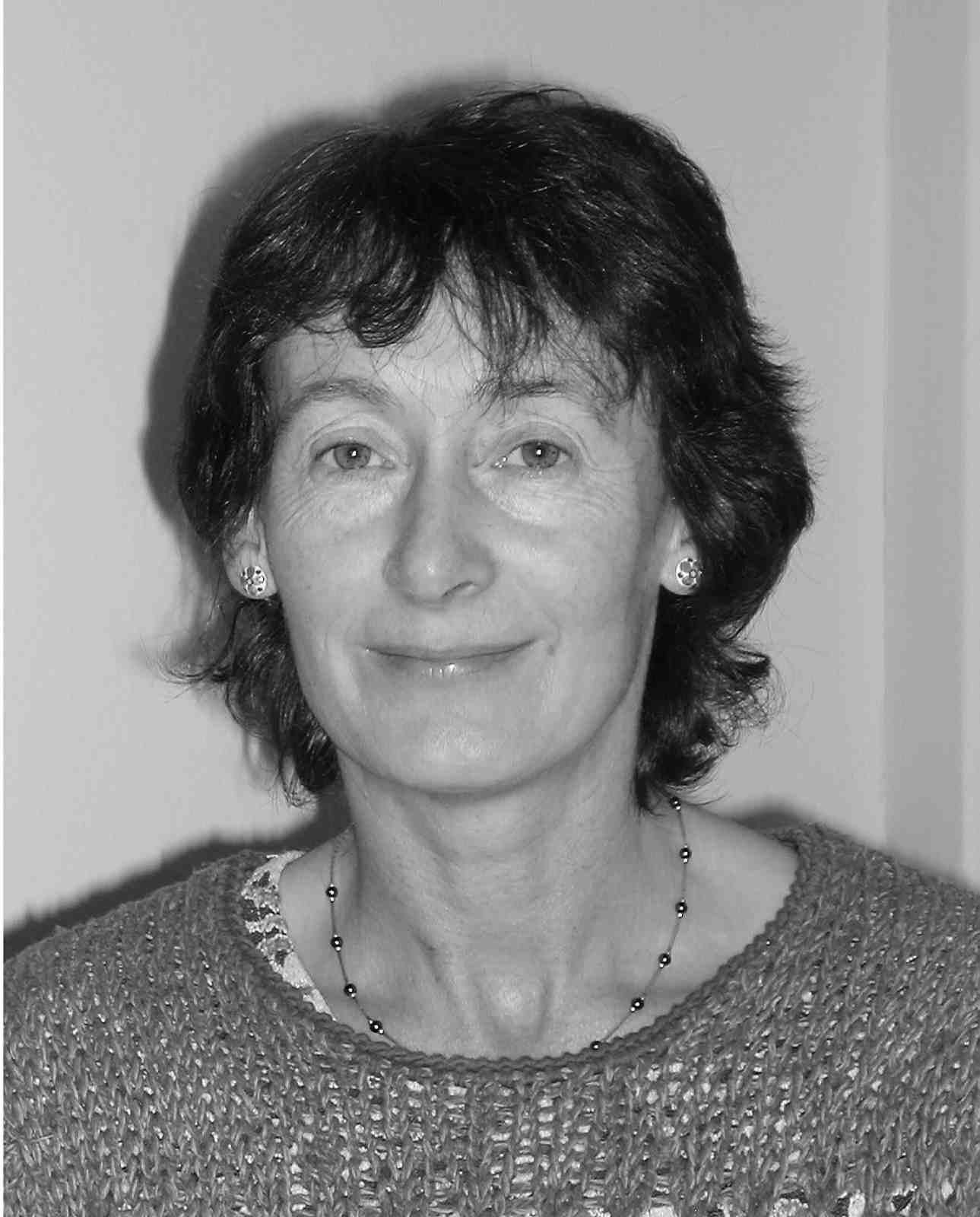
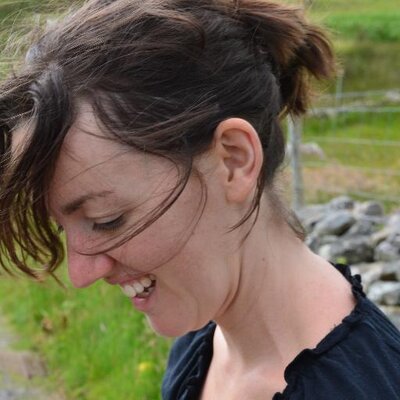
| Sometimes I think, do I write as a woman? Are my thoughts so different? What concerns woman and not men Do they have a gravitas I do not? Is the world I experience The search for truth To flay a heart and dissect a thought Should I be remote, detached as a diary? Where do my thoughts sit What else save love and loss to expect Am I not serious in my journey? Is there a scale I know not of? Are all the challenges reserved for men? To pontificate to helpless women Or is the emotional turmoil in poetry A commonality of the writing process? So in consideration I shall continue And explore the frontiers of being human Disregard the doubts And write, simply because I must untitled is © Mary Cecil |
Category: Contemporary Irish Women Poets
-
-
Lepus
Their collective noun is ‘drove’
though they mostly live alone,
content with a solitary life,
or become one of a pair
growing brave in the spring;
chests puffed out, as if
fluid has filled the cavities
and dropsy has caused a long-forgotten
frenzy, that gives rise
to a meadow dash in daylight
or a moonlit boxing match
below the moon hare’s dark patches;
that ancient celestial ancestor,
as a distant cousin is driven south
by the hunter and his dogs.
Lepus is © Stephanie Conn (first published in Burning Bush II)
Stephanie Conn was born in Newtownards, Co. Down, in 1976. Her poetry has been widely published. She was shortlisted for the Patrick Kavanagh Prize, highly commended in the Mslexia Pamphlet Competition and selected for Poetry Ireland Introductions Series. She is a graduate of the MA programme the Seamus Heaney Centre. Stephanie is a recipient of an Arts Council Career Enhancement Award and recently won the inaugural Seamus Heaney Award for New Writing. Her first poetry collection is due to be published by Doire Press in autumn 2015.
Delta and other poems by Stephanie Conn -
Family Portraits
“With skin like that,
you don’t have to
open your mouth.”
Muting
praise; Mother twirled
back the sardine-tin key
of his sister’s tongue.
Richard Avedon, embryonic
photographer
fixed his Kodax Box Brownie
on Sister, to exhume
her from her own beauty.
… she believed she existed only
as skin, and hair,
and a beautiful body …
He sought
sun, the negative of his muse
in hand to place on his shoulder:
used his own skin
as a contact sheet
for the image to burn into him,
to carry her
as widows clutch framed photos
of loved ones lost
to war.
ok
1.
His tattoo: a stitch of self
harm, a barcode, a brand,
a word he wants so badly
to replace his own skin
that he signs consent
to be burnt blue.
He lies down
to give his flesh
to the upper-hand,
the cruel beautician.
2.
Beauty is nothing
but a flaw so stunning
it can’t be ignored.
Its twin image burrows
into the soft space
of the beholder’s mind,
home-making, breeding
ideas, word by word
they contort and leap
to twist every eventuality
into the bent shape
of ok.
Lifelike
Transcend the gown without
leaving your body: your first mission
should you choose to redress it.
Followed by negligé negligence,
flattened heels,
unproductive visage
with lips unstuck
and colourless toes.
Forget bridal makeup packages,
beauty queen campaigns,
perfectly accessorised communions.
What lies
on bare skin but dead skin
motes of past times
exfoliated until your final
newness halts
and you are painted lifelike
and dressed
in something really very You.
Scent of a Woman (Echolalia)
Text: NPR article ‘Smell that sadness? Female tears turn off men’ by Joe Palca (7.1.11)
From human testosterone
levels in this specific moment
edge sweat or saliva.
A drop in arousal, colleagues
say, dribbled down cheeks.
A team of scientists starts crying.
Crying serves a purpose.
What is the state
of sexual chemical communications
causing this effect?
Whatever substance
women’s tears may reduce—
tear donors watch, seeing clearly
questions.
Researchers had their female
smelling authors of compassion
(a recognisable smell).
Colleagues sniffed, not convinced.
But scientists could be found
in a lot of places, willing
to donate tears.
The urge to signal: your human
tears may have an effect on you.
That was responsible
for quiet after men. Even if
you can’t look at pictures
of women’s faces,
a few drops of a woman was
to see a reality.
‘Lifelike and other poems’ is © Jennifer Matthews
Jennifer Matthews writes poetry and is editor of the Long Story, Short Journal. Originally from Missouri, USA she has been living in Ireland for over a decade, and is a citizen of both countries. Her poetry has been published in, or is forthcoming from Banshee, Poetry International — Ireland, The Stinging Fly, Mslexia, The Pickled Body, Burning Bush 2, Abridged, Revival, Necessary Fiction, Poetry Salzburg, Foma & Fontanelles, and Cork Literary Review, and anthologised in Dedalus’s collection of immigrant poetry in Ireland, Landing Places (2010). In 2015 she was selected for the Poetry Ireland Introductions Series. A chapbook of her poetry, Rootless, is available to read free online at Smithereens Press.
- Jennifer’s blog
- Follow her on Twitter @JenMarieMa
-
CROSSROADS
Nineteen forty-five was like that
Free-wheeling to the crossroads;
Fifteen miles later; her own birth-place;
Travelling was the best part, the wind at her back,
A greeting ahead. News from home….
Roaming the familiar lanes, sisters
Continuous chatter; away from the
Clatter of feeding hungry hens, pigs and
Cows. She could roam without children,
For a day: To pause for some rest.
A small slip of time away from the chores
That shaped her life. No sooner had the
Ceili begun, it was time for the door: among
Promises to write, feeling satisfied to have rested
Those tired limbs. She’d set off, her frame;
Feeling heavier, cycling up hills, the thrill
Of the annual visit finished; her spirit slightly
Diminished, yet younger. She’d relay through letters,
How when she got back to the crossroads….the
First thing she’d hear; to spoil her wonder
Were her pigs squealing with the hunger..
PASSING SUNSETS
Evening, and there is nothing
To tempt me indoors.
Warmed from a day spent in the sun;
I spin it on my fingertips,
Pass it, to my team-
Mates.
Scoring goals
Win rolls of respect. Talents
Swaying to the chants; that
Tribal-like victory dance.
Ball of mesmerising fire –
Football skills that inspire. Cool
Moves; dipping, diving,
Thriving, in the company,
Until friends slip away,
As they are called in –
One by one.
Alone, with a crimson sky;
The breath I take is sharp
Like loneliness,
As the night turns – flat.
MUM AND SPUDS
How are you managing for heating oil?
Do you know that Mrs Mullin died?
I hope you like onions with your stuffing?
You said in your text that you’re on nights next.
Heaped on offerings of food,
Hot pans make mood for flavour.
Television. Loud repeated soaps,
Water hissing on stove. Potato
Peelings blocking sink – no time to think;
Can I help? I question her red face,
No it’s alright – clean the windows instead –
but listen; wait until after you’re fed.
POTATOES
I can smell the sweet potato peel
Upon my skin – and I visualise walking
Amongst the summer rows.
I pick over the box of earthy potatoes.
When I pull one that is perfect
I turn it in my hand like a gold nugget –
Buried in my memory – a charm.
I peel back happiness from the soil,
Memories drop into a watery bowl;
The day we planted them – sowing
Love which had lain on the edges.
Uncertain, I nearly threw love out
With un-seeded tubers; to decay in hedges.
Instead I wrapped them and stored them
In a cold shed – for spring planting;
I can already see your face shining pride
At flowering drills; you stand with a wide-stance;
The posture of the accomplished soul – your eyes,
Stare lovingly at each planted offering.
THE VOYAGING VESSEL
Even as the tides subside
I glide the horizon like a black-
Backed gull.
Waves of awe unleash
A various world of
Words I find deep in the folds
Of a sail-weathered wind
Freedom
Like golden grain in my hand
Rolling the currents to fly
Against a limitless sky.
I harbour the salt and the scent
From bays of seafaring faces,
The sea of pearled possibilities
Where beneath the rim and the rhythm
Coral, shells and speckled fish
Water me with colour.
THE LAST FIRE
You gathered sticks
To bathe the night with fire,
You, in your element
Smiling watery eyes;
Happy sighs – as you bent.
The next day your soul gathered
Over your cold body
To be buried under sticks and clay….
These poems are © Helen Harrison
Helen Harrison was raised on the Wirral, seven miles from Liverpool, by Irish parents, and has lived most of her adult life in the border countryside of Co Monaghan, Ireland where she is married with a grown-up daughter.
During 2014 she was awarded a bursary from the Arts Council of Northern Ireland to study poetry for a week at The Poets House, Donegal.
Her poems have been published in A New Ulster, North West Words and The Bray Journal.Her first collection of poetry The Last Fire was published during 2015 by Lapwing. Some of her poetry can be found at poetry4on.blogspot.com -
Bind
if there are birds here,
then they are of stone.
draughts of birds,
flesh, bone, wing,
a claw in the grass.
rilled etch gathers to her nets
of dust and fire –
tree-step (again).
bird claw impinge, and lift.
surely light would retain in
silica’s cast or flaw ?
bind again
it gathers outside the perimeter
not wanton gargoyle nor eagle
it is of-one-piece seamed,
a migratory pattern of
umbered dawn rolling her black frenzy
down the condensed corridors.bind and bind again were first published in Deep Water Literary Journal (August 2015)

Thanks to Tom and Eve O’Reilly at Deep Water Literary Journal for publishing ‘bind’. The new DWLJ is online now and it is well worth a visit. I am adding here a link to Tom D’Evelyn’s blog. Tom wrote about the ideas in ‘bind’. I am, and have been very grateful to Tom who has written so graciously about my work for sometime now. Poets require readers who react to and understand the work, especially when the work is inherently about teasing out the image. ‘Bind’ is from a book in progress that is divided into four main sections, Boundaries, Babel, Wintering, and Park and Corridor. It is a winter book.
-


-
The beauty of the game
is lost on me when I watch you play.
I see the curve of your cheek,
the rounded base of your skull
– once a custom-fit for my palm –
and feel again the warm weight of your incipience.
No more walnut-snug in my armour
your head now bobs around the pitch
and air shrieks with the thwack of
plastic against wood,
against bone.
(first published by The Ofi Press)
Dark Days
i.m. Savita Halappanavar
Suspended at the end of Krishna Paksha,
the moon is a sickle
freeze-framed in the night sky.
The fireworks have been cancelled,
replaced by candles
and a vision of you
dancing on the cusp.
These are dark days
between Diwali and Advent,
waiting
for the moon to wax.
(first published by the Burning Bush 2)
Troglodytes
On visiting Lascaux cave for the 70th anniversary of its discovery
Inland, the road torcs into forest.
Among walnut trees, the house vibrates
with life: bees, hummingbird moths,
an infestation of squat black crickets.
They love the shade of cool clay tiles
and watch us sleep, eat, bathe, make love.
We sweep them out at night; they won’t jump –
just scuttle, and keep returning.
Deep in the lamplit chamber, shadows
in the knotted scaffolding, they watched
hands palpate the limestone for flanks, spines,
manes – and draw them into life.
And when the lamps guttered, they scurried
over aurochs, bison, the inverted horse,
till a dog arrived, with boys and lights,
and they were brushed aside:
not far, but out of sight,
waiting for night to fall.
(first published by The Clearing online)
The Darkness
In winter I awaken to the dread
of losing something indefinable,
and darkness stretches out around my bed.
September flips a trip switch in my head
and daily living seems less feasible;
in winter I awaken to the dread.
On All Souls’ Night I’d gladly hide instead
of letting on that I’m invincible,
as darkness stretches out around my bed.
By December, it’s as if the world were dead:
to fight the darkness seems unthinkable.
Each winter day I struggle with the dread.
I wish that I could hibernate instead
of coming to and feeling vulnerable
to darkness stretching out around my bed.
I try to think of shorter nights ahead
though springtime now seems inconceivable.
In winter I awaken to the dread
of darkness stretching out around my bed.
(shortlisted for the Strokestown International Poetry Competition 2014, and appeared on their website)Mulcair Lacking the romance of source or sea, this river middle, sectioned out in beats, is nonetheless a beaded string of stories, a rosary and elegy. Teens of the 1980s swam in jeans – our Riviera was the weir at Ballyclough, where we clambered weedy rocks and dived from trees, sloped off to smoke and throw sticks into the millstream. Each day at four the river ran from brown to red. The salmon steps were our jacuzzi, where Jacky Mull was held under by the current, re-emerging blue and slower. His life moved one beat down to the factory: Ballyclough Meats – leaning over concrete walls we watched him lugging piles of horse-guts and sluicing down the floors: each day at four the river water ran from brown to red. In reedy pools beyond the stone bridge lampreys shimmered. We dislodged them with rod butts till they coiled round our wellies, piled them into baskets in writhing grey bundles, tumbled them onto the lawn at home. In our houses we sloughed off our damp silty clothing. Forgetful of our monstrous quarry, dying slowly on the grass. Each day at four the river water ran from brown to red.(first published by The Stinging Fly)
-
Wie is de vrouw on de overkant?
Who is the woman on the other side?
It was the only phrase that stuck
in months of pre-trip conversation class.
As I struggled with the syntax,
it became clear you were a natural,
spending hours in the lab perfecting your grasp.
You couldn’t wait to track down a local
to ask how to say I love you? Ik hou van you,
you said, content with your acquisition.
You led me in the appropriate response,
encouraged me to practise daily. Ik hou ook van you;
all it took to keep you happy.
The towns we visited belonged to you,
their guttural place names all tongue and throat;
Groningen, Maastricht, Utrecht.
You strode through their stone streets
listing the features of gothic churches,
as I fumbled with a bi-lingual map.
(first published in the Yellow Nib)
Delta
The dilapidated hut at the sand’s edge
is a trick of the light, and shadows lift
to reveal a delicate arrangement of driftwood,
crate and rope; the uprooted debris of the sea.
Sunlight settles on a sodden sponge.
Here on a flat shelf of beach
disparities are ironed out;
faded plastic strips, origin unknown,
dull the glare of emerald glass.
Curious shallows slip to the shore.
Inland, the polder’s stillness is not disturbed
by the pylon’s hum or the clouds insistent shift.
She is remembering the sea, its possibilities,
drained by the regulated tidiness of men.
(first published in The Open Ear)
The Metronome
In my life there are several firmly fixed joys: not to go to the Gymnasium,
not to wake up in Moscow of 1919 and not to hear a metronome.Marina Tsvetayeva
Tick-tock.
I am four –
I want to live in a cuckoo clock,
emerge on the hour from the wooden door
to call my call.
Tick-tock.
I am six –
straight-backed on a black stool as a steel stick
oscillates, its methodical click
measuring my days.
Tick-tock.
I am eight –
I want to live in a bright street-light,
peer at the path or up to the sky, and wait
to speak to the stars.
Tick-tock.
I am ten –
lead-legged on the parquet floor as mother
sneers at the words that flowed from my pen,
and rips the book.
Tick-tock.
I am twelve –
I want to live in Valeria’s room,
touch powders, pills, scent bottles on shelves,
lock myself in.
Tick-tock.
I am grown –
know now that love is sharply felt in parting
for she played her last note, left me alone,
free at fourteen.
Tick-tock.
I am old –
the clock sends shivers through my clicking spine,
the power of the lifeless over the living told
in the steady beat.
(first published in the Ulster Tatler)
The Portrait of his First Wife
Jealous of whom? Of the poor bones in the cemetery?Maria Alexandrovna
They stand
face to face,
his two wives –
no, not quite.
The young one, seventeen,
still has her feet on the ground.
She looks up
to the other, hung high
on the drawing-room wall.
The beauty gazes back,
smiles with her dark eyes,
her mouth as delicate as a bird’s.
The girl walks
to a tall window, looks out
at the silver poplar leaning across the gate.
A growing daughter
quickens at her centre, drives her on
through the rooms of this wooden house.
And she waits
for the strong wail of a son
to drive out the song of all her nights –
the call of a nightingale,
emerging softly from beneath
the locked door, to sooth a living boy.
(first published in the Stony Thursday Book)
Blinking in the Dark
If you have placed your hands, at their urging, on the new wet skull,
small as a cat’s, and recoiled in surprise at the slippery touch
of matted hair, despite the months of waiting, of willing this moment
to arrive, then you too can go back to the start of it all;
to that moment in the dark, eyes shut and alert to every touch
when I caught my breath, and you took it and made it your own
and surged blindly on, splitting to become whole; of course,
we were totally unaware in the instant we set you ticking (busy talking)
but that night I dreamt of rain, or heard it on the window pane –
persistent drops that fell and found the swell of a lake or river and made
for the open sea; I thickened as shadows pulsed on screens and lines peaked
and fell long before the quickening that made you, finally, real –
you held on tight, where others had faltered, and were content
to watch your tiny hand open and close in that watery room until the walls shuddered
in their bid to expel and you emerged and cried out into the light –
our cord cut, they carried you off to count your fingers and toes,
the vertebrae of your still-curved spine, checking for tell-tale signs
that you might be less than perfect; they did not see the cord take form
or hear it hiss as it slithered upward, past my breast, and I lay caught,
lead-legged and tied to machines, as it rose up, ready to swallow me whole.
(first published in Abridged)
These poems are © Stephanie Conn -
summer haiku
choppy Irish Sea
failing to dislodge
this red starfish
poppy bed:
the unopened ones
as lovely as the blooms
a garden full of sunflowers swaying tall
muddy summer frogpond no splash
reject samsara ?
this wild summer river
this wild path
these stone walls
hemming him in too-
cinnabar caterpillar
cloudy afternoon…
my sweet pea flowers
becoming peas
A Train Hurtles West
morning downpour-
we have both dreamt
about our mothers
lingering
in my small bathroom…
mum’s perfume
Auld Lang Syne
in the background-
I sign her DNR request
mother dying a train hurtles west
death cert. incomplete granny’s maiden name
All through the Night:
this out of tune version
strangely moving
cloudy morning…
her solar-powered plastic flower
sways hesitantly
Maeve O’Sullivan works as a media lecturer in the further education sector in Dublin. Her poems and haiku have been widely published and anthologised since the mid-1990s, and she is a former poetry winner at Listowel Writer’s Week. Initial Response, her debut collection of haiku poetry, also from Alba Publishing, was launched in 2011, and was well-received by readers and critics alike. Maeve is a founder member of Haiku Ireland and the Hibernian Poetry Workshop. She also performs at festivals and literary events with the spoken word group The Poetry Divas. Her poem Leaving Vigo was recently nominated for a Forward Prize for a Single Poem by the Limerick-based journal Revival.
- A Train Hurtles West by Maeve O’Sullivan was published in 2015 by Alba Publishing
- Vocal Chords by Maeve O’Sullivan
- Alba Publishing
- An Index Of Contemporary Irish Women Poets
-
The Last Childbearing Years
Deliciously, all that we might have been,
all that we were— fire, tears,
wit, taste, martyred ambition—
stirs like the memory of refused adultery
the drained and flagging bosom of our middle years.
–Adrienne Rich, “Snapshots of a Daughter-in-Law”
1.
The green leaves: so young against the sun.
How our bodies betray themselves; spine
of white pine, all its vertebrae clinging
to the last of the day’s light—
what insects have fed on it? What birds
housed their young… it being an instrument
and now, not, and now: what? We call it
dignity, what the young fear in their lushness
but the fear once swallowed can’t be swallowed again.
It isn’t the age that tortures; it is the anticipation of the age…
the sons who will forget us, not being forgotten;
the purpose that ruins us and not its loss.
What is empty is not there. Does the past mock
like a calling bird? Do lost opportunities rattle
like phantom limbs? Or what is never tasted,
never remembered? Houses that weren’t built,
children who weren’t born and something, something
else… the scent almost perceptible; the sky always
hanging just out of reach.
2.
They tell me you won’t remember this time
I am weaving around you like daisies. That our walks
by the stream are only burblings; that my work is you
but it can’t be recognized or rewarded as work,
its meaning uncertain— but it must be done
and certainly not in the wrong way.
Dusting the whatnots: waste of a mind;
wasted body becoming an abandoned nest,
a field gnarled and burly with weeds:
eventually past fallow; past use
having been granted only that tenderest of privileges
which withers, then rots. I watch my body make a cage of itself:
sag and bulge with importance that is not its own,
leaving behind the shell that is me, and the me—
being for someone else, when it is not wanted or needed…
what does it mean? What is it to itself and how does it stand
in the mirror without its usual measurements?
3.
Don’t stand at the foot of the bed.
Preserve the allure: don’t see the flower
bulge and pulsate; expand like the moon
which swallows the world, only for another
to emerge. Don’t see how everything comes from this place:
smallest doorway, passage between unbeing and being,
portal. If you see this work, see how the body
is not what it seems: how flesh rips like silk—
not an oil painting, not a porn movie or needlework, not anything
cultivated to the delicate preferences of the eye. Only how power
gushes in laps of grey and blood ; the sheer will of the body
to stretch itself, to reach. How the body houses a sea, all life
teeming in a moment. Only a woman can do this. Only we call them
beautiful. Only we call them frail.
4.
Ornamental, which adorns, which complements
as though we ourselves are not real, as though we only reflect
what is real… because we unfold, because we reveal,
because our bodies are the flowers which weather,
emerging each spring in spite of elements or desire.
We bear what is necessary— beauty being secondary,
beauty being cultivated, prized, heralded. But the blossom
is not the center; coiled roots reach what is essential,
what sustains. Harvested, we bloom again.
Unwanted, we bloom until that season has past.
Spent, what is sewn from us continues the world.
The Last Childbearing Years is © Lindsey Bellosa
Lindsey Bellosa lives in Syracuse, NY. She has an MA in Writing from the National University of Ireland, Galway and has poems published in both Irish and American journals: most recently The Comstock Review, The Galway Review, Poethead, Flutter Poetry Journal, Emerge Literary Journal and The Cortland Review. Her first full length collection was recently longlisted for the Melita Hume Poetry Prize.
“Birth Partner” and other poems by Lindsey Bellosa