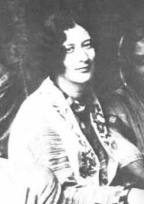
Simone Weil was an outsider, this she clearly stated in her personal letters and essays which are gathered in fragments or in small volumes, such as in Waiting for God. Those meagre fragments that have been published are not really readily accessible save on the curriculums of theological colleges (in modular forms) and presented in a contextualised and safe manner. I do not think that her writings on mysticism have been done justice in contemporary thought.
Weil’s themes are of her intellectual alienation from Catholicism (and her desire of it), poverty, philosophy, war, struggle, and totalitarianism ,
“A collective body is the guardian of dogma and dogma is the object of contemplation for love, faith and intelligence, three strictly individual faculties. Hence almost since the beginning the individual has been ill at ease in Christianity and this uneasiness has notably been one of intelligence, this cannot be denied” (I: 314)
and yet, in further essays on education, philosophy and the need for frontline nurses, Weil rejects civil law as aberrant and only necessary to prevent religious totalitarianism. Her dividedness is a mark of her deep and enduring thought on education and its uses, which can be reduced to the cultivation of attention. Here, Weil’s thoughts could be placed alongside other catholic women thinkers but her refusal of baptism puts paid to that. Her ideas culminate in the magnificent and difficult poetic work, Necessity.
I question why the work of Weil is not put on a par with her contemporary Paschal, or any comparative writer of religious mysticism. I can only imagine that her desire to be an outsider has been readily and promptly answered by those guardians of her letters (thoughts) in their failure to categorise her sufficiently in the annals of the catholic thinking which she so desired and yet so readily and completely rejected,
“Nearly all our troubles come to us from not having known how to stay in our room,” said another sage, Paschal, I think, thereby calling to mind in the cell of recollection all those crazed people who seek happiness in movement and in a prostitution I might call fraternal, if I wanted to use the fine language of my century. ” ( I:314)
I suppose it is difficult if one approaches the writings of a female mystic and powerful writer to safely categorise and apply a workable label to her when her outsider status was so firmly delineated by writing that does not really achieve for the reader a comfort-zone that can be safely and inalienably tagged as pedestrian. She presents a difficulty for those guardians of dogma who would rather not approach the questions of the post war-time era in a manner that may jolt sensitivities in those areas of agnosticism, anarchism, and mysticism discussed by Weil in her letters. There are many such neglects in contemporary thought on issues of philosophy and religion, though mostly they (or their invisibilites) apply alone to women writers of depth and clarity, such as the great Simone Weil. I am excerpting Le Personne Et La Sacré by Simone Weil, in which she develops her ideas regarding the individual cultivation of attention as the most necessary of those approaches to study and whilst I may not agree with her ideas on dogma and justice, I find her constant and integral struggle with the problems of developing the intellect to be almost pressing when so much of post-modernism is directed toward the degradation of the intelligence in favour of willful and negligent consumption,
Le Personne et la Sacré : by Simone Weil
“Beauty is the supreme mystery in this world. It is a brilliance that attracts attention but gives it no motive to stay. Beauty is always promising and never gives anything; it creates a hunger but has in it no food for the part of the soul that tries here below to be satisfied; it has food only for the part of the soul that contemplates. It creates desire, and it makes it clearly felt that there is nothing in it [beauty] to be desired, because one insists above all that nothing about it change. If one does not seek out measures by which to escape from the delicious torment inflicted by it, desire is little by little transformed into love and a seed of the faculty of disinterested and pure attention is created.”
Writers encounter archives mostly, and sound-work is no exception, for instance I encountered UBUWEB whilst researching Celtic mouth Music and Joesph Beuys. Kenneth Goldsmith’s idea to make film, poetry and music available online was sheer avant-gardeism.
I have written about UBUWEB before now here, and I recommend the Poetry Foundation link at the top of this page as an introductory to what has been happening online in terms of dissemination acrossliterary genres.
Other access points include the major US universities who archive readings, the first link of that type included here is of AllenGinsbergreading ‘Epithalamion‘ (ReedEdu)linked in the Threads section, which runs down the left-hand column of the Poethead site, andYouTube. YouTube has a wealth of surprising poetry readings, including the unforgettable first-time I heard SylviaPlathreads ‘Daddy‘ (BBCrecording). I have also added some Bachmann and Schwitters (Anna Blume) on to Poethead, though I must admit to under-using sounds on this site. Poet‘sPages has a ‘Spoken Word’ section, allowing mp3 uploads.
“ After all, Kerouac’s first language was not English, it was a kind of Quebecois called Joual, which is a totally vocal language. He says he heard it from his mother before he learned English.”
Silicon Republic article regarding ‘Radical Copyright Law Reform’ inIreland.
This morning (09/05/2011) Silicon Republic reported on a radical overhaul of Ireland’s Copyright Law, this is interesting given that most discussions in this area have been limited in recent times to the three strikes and you’re out nexus of anti-innovation. I am adding here the current link to the SR reportage, and a couple of links which focus on originators of work and their options in publication . In this case, mostly my focus is on poetry and poetics, as that is what this blog is about.
Poets have been innovating in this area for quite a period of time and have produced documents on fair-use , creative commons and best practices in digitisation and social-media. I consider the issue of copyright (and especially of artist-led discussion in this area) to be of the utmost importance, therefore I have added a permanent link to the Poetry Foundation website onto my landing-page. This page shows at the top of all posts and articles, along with three others which form the impetus of what this blog is about, women-poets (editors and translators),the literary arts, the Universal Declaration of Linguistic Rights, and about the poethead blog.
This morning Minister Bruton said: “I am determined that government will make whatever changes are necessary to allow innovative digital companies reach their full potential in Ireland. These companies make an enormous contribution to jobs and economic growth, and government must do everything it can to allow them to flourish and expand in Ireland.
“Some companies have indicated that the current copyright legislation does not cater well for the digital environment and actually creates barriers to innovation and to the establishment of new business models. Moving towards a US-style “fair use” doctrine is one suggestion that has been made.
“I am determined to respond to these suggestions in a comprehensive and timely manner. It is not wise to make changes to this extremely complex area of legislation without first considering the issues in detail.
“Therefore I have commenced a time-limited review of the law in the area to be conducted by three industry experts. The review will include a full consultation process with all relevant stakeholders, and the entire process will be complete within six months.”
Barriers to innovation at all levels of creative output include the misunderstanding of copyright conventions, or inability to properly utilise such innovations as Creative Commons licenses, which allow artists to set up copyrights (including derivative rights).
Derivatives in poetics include: translations, adaption (incl.musical) pictorial adaptions, film,musical references, translation from (both collaborative/non-collaborative) and quotations from, it is in the nature of poetry to lend itself to innovation. A simple example of derivation is (for instance) Leonard Cohen‘s adaption of Federico Garcia Lorca‘s ‘Little Viennese Waltz‘. (or we could go with Dante!) The adaption would not occur if artistic inspiration were stymied by copyright law that sought to lock-in how a piece of material is used. To this end , I am linking in a discussion regarding digisation, adaption and transmission from the Harriet Monroe institute which is titled ‘code of best practices in fair use for poetry‘ to illustrate how artists are driving discussions in this area of concern. The problems with previous discussions here in Ireland included that the consultation process was limited to big organisations who were perceived as the only stakeholders on the issue of copyright by our previous Govt, and quite ignorantly leaving out the artist/originator’s perspective on derivations.
We cannot forget that the creative arts have many stakeholders who are already concerned in this area and who have created and developed manifestos based on their understanding of the development of original works ! I am adding here an article relating to current Portugese problems , which imo do not take cognisance of the right of the artist/originator to set and maintain their own copyright . The onus is on politicians to read and understand that artists better get the process of creation and adaption, and in order to radicalise from that point, the consultation should necessarily be wide.
Additional Notes , The Harriet Monroe Institute , centre for social media discussion, Portugal to make Creative Commons illegal ?:
“Embracing the overarching value of access to poetry as its theme, the group saw that business, technological, and societal shifts had profound implications for poets publishing both in new and in traditional media, and also that poets have an opportunity to take a central role in expanding access to a broad range of poetry in coming months and years. Almost immediately, the group’s conversation focused on barriers to poetic innovation and distribution caused by clearance issues. Some of these clearance issues develop from the business structures underlying poetry publishing, but a significant number, the group discovered, relate to institutional practices that might be reconsidered, including both poets’ and publishers’ approaches to quoting and other types of possible fair use. Soon after its first meeting, the group began discussing the possibility of developing “best practices” for poets and publishers.“
Reported problems with Creative Commons in Portugal.
“Article 3, point 1 – The authors have the right to the perception of a compensation equitable for the reproduction of written works, in paper or similar support, for instance microfilm, photocopy, digitalization or other processes of similar nature.
[…] Article 5 (Inalienability and non-renunciability) – The equitable compensation of authors, artists, interpreters or executives is inalienable and non-renunciable, being null any other contractual clause in contrary.”
Submissions to the Copyright Review Committee should be sent to copyrightreview@deti.ie or posted to: Copyright Review, Room 517, Department of Enterprise, Jobs and Innovation, Kildare Street, Dublin 2. Submissions should be received by close of business on Thursday 30th June 2011.
Edit January 2012: “Is Ireland about to introduce a law that will allow music companies to order Internet service providers to block access to websites? I rang up the Minister of State at the department of Enterprise, Jobs and Innovation, Sean Sherlock, to find out. “The statutory instrument to be introduced is completely different to Sopa [Stop Online Piracy Act] in America” he told me. “We are simply addressing the High Court judgment handed down by Mr Justice Peter Charleton in relation to copyright law… I will introduce this imminently, by the end of January.” That’s a yes, then … ” from http://www.tjmcintyre.com/2012/01/adrian-weckler-confims-that-irelands.html
Flies have short lice. To hurry is wit in a flurry. Red raspberries are red. The end is the beginning of every end. The beginning is the end of every beginning. Banality becomes all respectable citizens. Bourgeoisie is the beginning of every bourgeois. Spice makes short jokes nice. All women hate mice. Every beginning has an end. The world is full of smart people. Smart is dumb. Not everything called expressionism is expressive art. Dumb is smart. Smart remains dumb.
I was looking for poems based in the Dada era this lovely morning , wishing to publish my favourite one, Anna Blumebut decided to add the above and a link to Anna Blume instead.
The meaning of collaborative work in Poetry and Literature.
The author is entitled to ownership of their work. In poetic terms, derivatives do occur, mostly in music and in translations. As stated before on this blog, derivatives are seen as adding to the original works, once attribution is established. The fact that there are appalling non-collaborative translations online of great poets is irritating. The issue of copyright and fair use has been linked here Via the Poetry Foundation and it really is a most important text.
Digitising bodies of works and how derivatives occur
Digitisation is widespread, many authors will need to learn to establish their rights on blogging platforms, and indeed how to use such services as Scribd. Not all original works are necessarily confined to publishing contracts. Thus we have access to licensing services like Creative Commons.
Literary and poetic work is meant to be shared and to be accessible, for that reason innovating is necessary, but there are conventions and respects for authorship in place, which take cognisance of the rights of ownership to original works. Some issues in the GBS row which were not fully discussed were concerned in the area of pictorial, collaborative translation, and forewords! A book or piece of digital-work does not come in snippets and it is really up to the author if they wish snippets to be made available to online communities. Using CC is one way of doing so.
Libraries are mostly works of collaboration and are already digitising at that level !
The ideality of a library making original works available online is a wonderful one in many ways, everyone has seen how vulnerable libraries are to attack, to cuts and to censorship. The idea of building up a digital library should be based in the highest understanding of the merits of literary and artistic works, and to the best in copyright law which takes cognisance of the author’s rights to ownership. This would mean involving authors at a level of understanding which is evinced in my first link above, to the Poetry Foundation.
“Poetry is more than a body of writings or a typology of forms; first and foremost, it is an evolving set of practices that engage, and are engaged by, the creative work of others. During the extensive conversations leading up to this document, a few central themes about poetic practice emerged. The first was that poets generally (though not universally) want their poetry to be as widely available to potential audiences as possible, both during their lifetimes and beyond. However, poets, especially those not working in and for new media formats, expressed anxiety about how new media might affect their ability to make money from their work and to establish and advance academic careers. And they were concerned about the ease with which new media enable others to distribute and alter their poems without permission. At the same time, poets urgently expressed their need to use material derived from the poems of others (including twentieth and twenty-first-century writers) in their own work, and their desire to do so in ways that were both ethically and legally appropriate.”
“To spread awareness about the Google Book Settlement, Poetry Ireland and the Irish Copyright Licencing Agencyhave joined resources to provide rights-holders with the most up-to-date, unbiased, and clear-cut information available.*
A number of seminars on the settlement have taken place around the country. One of the most important messages that emerged from these meetings was that whether or not the settlement stands, digital publishing is part of the future, and similar digitalization projects are in progress. Rights-holders need to decide how to deal with Google and other such projects.
With the advice and help of Samantha Holman (Director of ICLA), Poetry Ireland has put together a compact, but in no way comprehensive, fact-sheet on the settlement.”
You may want to begin at the end: the last page is a very useful set of questions that should help to put the dizzying complexities of the settlement into perspective and will direct rights-holders on what their next steps may be.
March 22nd Judgement on Google Books Settlement digitisation.
“While the digitization of books and the creation of a universal digital library would benefit many, the ASA would simply go too far. It would permit this class action – – which was brought against defendant Google Inc. (“GoogleI1) to challenge its scanning of books and display of “snippets” for on-line searching – – to implement a forward-looking business arrangement that would grant Google significant rights to exploit entire -2-books, without permission of the copyright owners. Indeed, the ASA would give Google a significant advantage over competitors, rewarding it for engaging in wholesale copying of copyrighted works without permission, while releasing claims well beyond those presented in the case.”
A short time ago I wrote an introductory to the Poetry Foundation discussion on best practices in Fair Use of Poetry, which should serve as a guideline on the creation, licensing and transmission of original materials.
” Fair use, a limitation and exception to the exclusive right granted by copyright law to the author of a creative work, is a doctrine in United States copyright law that allows limited use of copyrighted material without acquiring permission from the rights holders. Examples of fair use include commentary, criticism, news reporting, research, teaching, library archiving and scholarship. It provides for the legal, non-licensed citation or incorporation of copyrighted material in another author’s work under a four-factor balancing test. The term fair use originated in the United States. A similar principle, fair dealing, exists in some other common law jurisdictions. Civil law jurisdictions have other limitations and exceptions to copyright“.
That link on Fair Use and current discussion on the creation of a new Irish Version of 3.0/BY-NC-SA/Draft Creative Commons Licence (UCC) have prompted a short piece at Writing.ieregarding the treatment of the Poet’s original work, both ours as poets, or as we review or translate the original writing of fellow writers in our blog-spaces or in other online modes of transmission. I’d like to thank Vanessa O Loughlin who requested the piece.
Introduction to The Harriet Monroe Poetry Institute discussion here:
“During 2009, the Harriet Monroe Poetry Institute convened a group of poets, editors, publishers, and experts in copyright law and new media, with the goal of identifying obstacles preventing poetry from coming fully into new media and, where possible, imagining how to remove or mitigate these obstacles. Embracing the overarching value of access to poetry as its theme, the group saw that business, technological, and societal shifts had profound implications for poets publishing both in new and in traditional media, and also that poets have an opportunity to take a central role in expanding access to a broad range of poetry in the coming months and years. The resulting Poetry and New Media: A Users’ Guide report covers topics such as copyright and fair use; royalties, permissions, and licensing; estates; access and lifelong engagement with poetry; and engaging educators, institutions, and communities.
The Harriet Monroe Poetry Institute invites poets, publishers, and everyone involved with poetry as an art form to consider this report, the upcoming Best Practices for Fair Use in Poetry document, and other available resources as they make their own thoughtful and conscious decisions based on their values and priorities in relation to these topics. As the new-media environment is ever changing, we present the Poetry and New Media report and the upcoming Code of Best Practices in Fair Use for Poetry in the spirit of an evolving conversation on a timely topic.”
“Wherever we turn in the storm of roses, the night is lit up by thorns, and the thunder of leaves, once so quiet within the bushes, rumbling at our heels.”
“News o’ grief had overteaken Dark-eyed Fanny, now vorseaken; There she zot, wi’ breast a-heaven, While vrom zide to zide, wi’ grieven, Vell her head, wi’ tears a-creepen Down her cheaks, in bitter weepen. There wer still the ribbon-bow She tied avore her hour ov woe, An’ there wer still the hans that tied it Hangen white, Or wringen tight, In ceare that drowned all ceare bezide it.
When a man, wi’ heartless slighten, Mid become a maiden’s blighten, He mid cearelessly vorseake her, But must answer to her Meaker; He mid slight, wi’ selfish blindness, All her deeds o’ loven-kindness, God wull waigh ’em wi’ the slighten That mid be her love’s requiten; He do look on each deceiver, He do know What weight o’ woe Do break the heart ov ev’ry griever.”
“The TLS is only interested in getting the best reviews of the most important books,” and “while women are heavy readers, we know they are heavy readers of the kind of fiction that is not likely to be reviewed in the pages of the TLS.“ (Peter Stothard, making his own importance)
So are Newspaper literary supplements and literary magazines not employing women reviewers,editors and /or critics, or are they just riddled with meddlesome women-misogynists who think that fellating the alpha-male poet/ fiction writer is a recognition of women’s contribution to the literary arts ?
At the end of 2010 the editorial and best books lists began to emerge, list after list evinced a paucity ofwomen writers in poetry, in fiction and in the arts. Interestingly,the horizontal media feeds like Twitter and Facebook hardly picked up on the issue of the profound absence of women writers from the 2010 lists.
“I am writing to express my alarm that this is now the second issue of the NYer in a row where only two (tiny) pieces out of your 76 page magazine are written by women. The January 3rd, 2011 issue features only a Shouts & Murmurs (Patricia Marx) and a poem (Kimberly Johnson). Every other major piece—the fiction, the profile, and all the main nonfiction pieces—is written by a man. Every single critic is a male writer.
We were already alarmed when we flipped through the Dec 20th & 27th double-issue to find that only one piece (Nancy Franklin) and one poem (Alicia Ostriker) were written by women. A friend pointed out thatJane Kramerwrote one of the short Talk of the Town segments as well, though it barely placated our sense of outrage that one extra page, totaling three, out of the 148 pages in the magazine, were penned by women. Again, every critic is a man. To make matters more depressing, 22 out of the 23 illustrators for the magazine are men. Seriously!
Women are not actually a minority group, nor is there a shortage, in the world, of female writers. The publishing industry is replete with female editors, and it would be too obvious for me to point out to you that the New Yorker masthead has a fair number of female editors in its ranks. And so we are baffled, outraged, saddened, and a bit depressed that, though some would claim our country’s sexism problem ended in the late 60’s, the most prominent and respected literary magazine in the country can’t find space in its pages for women’s voices in the year 2011.
I have enclosed the January issue and expect a refund. You may either extend our subscription by one month, or you can replace this issue with a back issue containing a more equitable ratio of male to female voices. I plan to return every issue that contains fewer than five women writers. You tend to publish 13 to 15 writers in each issue; 5 women shouldn’t be that hard.”
Article 2 : From VIDA , The Count ( December 2010):
“The truth is, these numbers don’t lie. But that is just the beginning of this story. What, then, are they really telling us? We know women write. We know women read. It’s time to begin asking why the 2010 numbers don’t reflect those facts with any equity. Many have already begun speculating; more articles and groups are pointing out what our findings suggest: the numbers of articles and reviews simply don’t reflect how many women are actually writing. VIDA is here to help shape that discussion. Please tell us about the trends you’ve witnessed in your part of the writing world. Let us know what you think is going on. We’re ready and anxious to hear from you. We’re ready to invest our efforts and energy into the radical notion that women are writers too”
Article 3 : The Harriet blog, published by Poetry Foundation has taken up the issue , and I am excerpting here:
“Here at Poetry we were all interested in “The Count” that VIDA recently produced. Interested, but not especially surprised. The count shows—with pretty devastating consistency—that women are under-represented in all of the major literary magazines, including Poetry (though Poetry fares much better than the others).
This didn’t surprise us because the issues that VIDA are raising have long been of concern to us. The disparity is something I first noticed seven years ago when I commissioned Averill Curdy to write an essay wondering where all the women poetry critics were. Subsequent issues contained responses from well-known women poet-critics of another generation . The aim was to provoke a conversation, first of all, but more importantly to get more women writing in the back pages of the magazine. More recently, senior editor Don Share participated in a roundtable on gender and publishing sponsored by VIDA.”
Article 4: Guardian Discussion on the VIDA figure which elicited a quote from Peter Stothard (TLS) :
“The TLS is only interested in getting the best reviews of the most important books,” and “while women are heavy readers, we know they are heavy readers of the kind of fiction that is not likely to be reviewed in the pages of the TLS.“
The election has been called and a new government is imminent. That means new policies and new priorities – with no guarantees for funding and continued investment in the arts.
Once again, we must make a case for the arts. We must:
lobby to maintain a full cabinet Minister for Arts
promote the role and value of the arts
campaign for continued and increased investment in the arts
advocate for the provision of appropriate social protection for artists and those who work in the arts.
Once again, we need your help. You can help in five simple ways:
1. ATTEND THE HUSTINGS
In Dublin the arts spokespersons from all 5 political parties will attend a meeting to outline their respective arts policies and answer your questions. There will be a similar format in Galway with candidates from Galway East and West constituencies invited to present their local arts policy and answer your questions.
Come along and make the arts an election issue. It’s important we show politicians the arts matter! Monday 14 February
If you would like any further information about our activities this year please contact Tania Banotti. The website will be updated with all relevant information about the campaign by next week.
A brief note on arts policy and the 2011 General Election.
I note that Fine Gael has released a policy document in relation to arts, this is press-released from the National campaign for Arts website, which I am linking here, beneath this brief excerpt. This link is to the National Campaign for Arts index page . I will add in other political party policy papers if they become available during the election campaign.
Fine Gael Arts Policy 2010.
• The arts and culture “will have a seat at the cabinet table” in any future FG government.
• Commitment to a flagship Literature Centre in a landmark building in Dublin, given the UNESCO City of literature designation and possibly a new arts and film channel.
• A much greater commitment to the arts in the school curricula & the cultural rights of children as well as core funding for organisations providing arts programming for children
• As part of 2016 commemoration, a range of new commissions beginning immediately. . • National Endowment Fund for the Arts to be set up.
• Arts Council vacancies in future will be in future advertised.
One hopes that ‘ the seat at the cabinet table ‘will comprise a full portfolio…
for Firoana. The plains of Romania Under thirty degrees of heat Stretch to the poplar trees At the edge of the earth. A weathered peasant lady Offers me water, Her toothless smile Mothers me As I rest in the shade. She is a daughter of this soil, Of sun and sweat and toil. I am from a city She will never visit. As I return her smile And sip her water She is every woman’s mother, I am every woman’s daughter.
from Still, by Helen Soraghan Dwyer.
Máthair Chréafóige
do Firoana Machairí na Rómáine I mbrothall an lae Síneann go poibleoga bhána Ar imeall an domhain. Bean chríonna tuaithe A thairgeann deoch dom, Miongháire mantach Dom mhúirniú Istigh faoin bhfothain. Iníon chréafóige í, Iníon allais is gréine. Ón gcathair nach bhfeicfir choíche Is ea do thángas. Aoibh ormsa leis Ag ól uisce, Iníon cách mise, Máthair cách í siúd. as Faire, le Helen Soraghan Dwyer. Lapwing Publications, Belfast 2010. Note about the Book. I picked up this book and another volume of women’s poetry on Saturday, in my local bookshop. The poetry section is well-balanced and stocked. As I have not asked permission to advertise the shop, so I won’t name the wonderful proprietor yet. Suffice it to say that she also does some excellent internet ordering , and has some independently bound essays which are virtually impossible to get in Ireland. I shall edit this with a link to catalogues in the near future.
Máthair Chréafóige – Earth Mother by Helen Soraghan Dwyer. From Still – Faire. Trans, Bernadette Nic an tSaoir Lapwing Publications 2010.


 Chris Murray