• chris murray
  • journals – bibliography – publication notes
  • downloadable items – essays – media
  • copyright
  • Home

Chris Murray

  • “Bow Down” at York Literary Review

    June 6th, 2016
    cropped-Purification-watercolor-and-black-carbon-pigment-on-cotton-paper-2014

    Bow Down

     
    A harrowed tree
    nest-ruined
    tangled leaf
     
    Its bough down
    bow down—
     
    A-flowering-tree
     (still, it flowers)
     
    Submarine blue is
    where dawn occurs
     (South/South-east of here)
     
    Dawn’s lightbox runs
    from north blue
    to south warm
     
    The point between
    is lit-not-lit
      (nor) seamed
     a bas-relief.
     
    Bow Down is from ‘bind’ and was first published in York Literary Review, Issue #1 2016
     

    York Literary Review
  • “Pair Bond” and other poems by Barbara Smith

    June 1st, 2016

    Gwion’s Birthday

     
    Today I bought your birthday presents:
    what you wanted and what I wanted
    for you: new clothes and an Xbox game.
    Back across the stretch of thirteen years
    I reach for the time you nearly didn’t make it
    past your first: listless, sleeping on the sofa,
    an infection deep within your bronchioles,
    a third visit to the doctor for a letter
    to admit you, a sweating wait outside the room
    while they tried to insert a cannulae – twice –
    and put in a drip before your isolation
    on the fifth floor with a window-whistling view
    of the graveyard and our home beyond. It was
    two days before your hands reached up to mine.
     
    The Angels’ Share (Doghouse Books, 2012)

    Achieving the Lotus Gait

     
    In winter, the uphill path to Madame Xing’s
    is treacherous. I watch for loose
    stones among the grey brown gravel
     
    and the birds are almost silent
    as each step quarries me,
    wincing on wooden pattens.
     
    Madame unravels yards of stinking cotton
    from my feet and her thorough thumbs
    knead them from numbness,
     
    She honours my feet with warmed water
    loosening shedding skin,
    trims each bruised nail to the quick.
     
    She rebinds each foot in cotton lengths
    soaked in herbs and animal blood.
    A neat figure-of-eight turns
     
    over instep, gathers toes, under foot
    and round the heel, each pass tighter
    than the last. And then my thoughts
     
    cringe homewards, as I totter out under
    a brittle moon; my own weight
    crushing each foot into the correct shape.
     
    Shortlisted Basil Bunting Poetry Competition, 2009
    The Angels’ Share (Doghouse Books, 2012)
     

    Pair Bond

    dedicated to Dolly Parton
     
    The talk in the bar lulls a half-time fill:
    as I knife scrape the head from another pint,
    he hovers, pocket-foothering his change.
     
    Steadying for the ask, he addresses
    my full frontals, my baby buggy bumpers,
    my Brad Pitts, my boulders, my billabongs,
     
    my squashy cushions, my soft-focus bristols,
    my motherly bosoms, my matronly bulk,
    my Mickey and Minnie, my Monica
     
    Lewinskis, my Isaac Newtons,
    my snow tyres, my speed bumps, my Tweedle Twins,
    my milk-makers, my Mobutus, my num-nums,
     
    my Pia Zadoras, my Pointer Sisters,
    my honkers, my hooters, my hubcaps, my hummers,
    my Eartha Kitts, my Eisenhowers,
     
    my Gods milk bottles, my Picasso cubes,
    my chesticles, my cha-chas, my coconuts,
    my dairy pillows, my devil’s dumplings,
     
    my objectified orbs, my über-boobs,
    my one-parts Lara, my two-parts globe,
    my skywards pips, my lift and separate,
     
    my airbags, my feeders, my mammy glands,
    my Bob and Ray, my big bouncing Buddhas,
    my sweater stretchers, my sweet potatoes,
     
    my rosaceous rotors, my trusty rivets,
    my melliferous melons, my mau-maus,
    my tarty, my taut, my pert palookas,
     
    my jahoobies, my kicking kawangas,
    my agravic gobstoppers, my immodest maids,
    my Scooby Snacks, my squished-in shlobes,
     
    my cupcakes, my soda breads, my bloomin’ baps,
    my brilliant bangers, my brash bazookas,
    my windscreen wipers, my Winnebagos,
     
    my wopbopaloubop, wopbopalous,
    my yahoos, my yazoos and yipping yin-yangs,
    my paps, my pips, my pommes-de-terres,
     
    my pushed-up, plunged-down, paraded balcony,
    my slow reveal, my instant appeal,
    my décolletage, my fool’s mirage,
     
    and I watch him pay up, steady up and leave.
     
    The Angels’ Share (2012, Doghouse) also frequently performed with The Poetry Divas.
    Published in Catechism: Poems for Pussy Riot, 2012.
     

    Summiting

     
    You must know the end to be convinced
    that you can win the end, cool and quiet:
    the solemn dome, fine and firm above all
    its chasms of ice, its towers and crags,
    this thing that all your desire points up to.
    Here experience distils the muscle ache
    and crystal skies into a bleary memory
    of how you gained the top in so many days.
    The conquered enemy is but ourselves.
    Success means nothing here. Kingdoms of rock,
    air, snow, and ice, we hold for just the time
    it takes to survey in a slow circle,
    soberly astonished by our struggle
    to master mountains with our own flesh.
     
    Mallory Sonnets, The Angels’ Share, 2012. Doghouse books.
    Southword Issue 18, 2010.


    barbara-smithBarbara Smith lives in County Louth, Ireland. She holds an MA in Creative Writing from Queen’s University, Belfast. Her achievements include being shortlisted for the UK Smith/Doorstop Poetry Pamphlet competition 2009, a prize-winner at Scotland’s 2009 Wigtown Poetry Competition, and recipient of the Annie Deeny 2009/10 bursary awarded by the Tyrone Guthrie Centre for Artists and Writers, Ireland. Her first collection, Kairos, was published by Doghouse Books in 2007 and a second followed in 2012, The Angels’ Share. She is a frequent reader with the Poetry Divas, a collective that read at festivals such as Electric Picnic.

  • “Eve Labouring for 37 Hours; the Yes poem” C. Murray

    May 26th, 2016

    ring—

    Eve labouring for 37 hours, the yes poem

    Great
    monumental
    Eve in pain

    will bring
    forth a Cain
    Abel
     —Cannibal

    Exhausted stretch
    rather/ rather/ rather
    rather/ rather/ rather
    dilate/ than die/ yes.

    So just, sous justice.
    en vertu de la justice,
    pour, 

    ‘In sorrow you shall bring forth children’

    Face present ? Yes, yes–
    Hands? Yes-
    His image,
    Who conjured it?

    This mouth of dry twigs
    the sticks/stones
    bones / buttons
    a / knee-piece/ skulls.

    There are piles of skulls
    pushing through my grimacing cunt—

    all the pretty things,
    stones/bones/buttons / a /
    knee-piece / skulls/ the threads

    Sous justice.

    So just, sous justice.
    en vertu de la justice,
    pour,

    ‘In sorrow you shall bring forth children’                                                                                                                      


    The Burning Tree

    Mineral planes impinge
    surface embed glares red,
    deep red.

    A scarlet arrow
    burns out on my white tile,
    and cools.
    The burning-
    years’ round brings Rothko light
    – tree.

    Glass stained in a bloody
    transparency.

    Sun brings up the silica
    right to its surfaces,
    where they may glitter
    their red sparks.


    Willow

    Willow’s wooded music is hollow,
    dead, or veiled.
    She awaits yellow spring.

    Willow is first to don it.

    A tree,
    plain and ordinary.

    “Eve Labouring for 37 Hours; the yes poem” at Levure Littéraire 12 & other poems are © C. Murray

    I am very grateful to Carmen-Francesca Banciu for publishing my group of poems at Levure Litteraire 12.

    Image by Leonard Baskin
    Image by Leonard Baskin

    From the editorial: The Camps of Resistance and Fields of Consciousness, is the theme of this issue. A wide field! A multifaceted theme that addresses many aspects of our time. When we chose this theme, we did not yet realize that the future contributions would be so inspired by the present and focus on specific aspects, such as (e)migration, exile, escape.The drama of flight, losing one´s home and a country – but even the ambivalent feelings toward the refugees- are the main aspects that have emerged from our topic. Many of our writers have dealt with the theme in an artistic, essayistic, philosophical form.

    Impressive contributions resulted. Among others, even interdisciplinary projects were created, such as the cooperation between the Irish-American writer Emer Martin and the Indian-American artist Moitreyee Chowdhury, a joint video art, poetry and painting contribution. Or the contributions from Gesine Palmer, Sabine Haupt, Peter O’Neill – just to name a few out of the abundance of outstanding contributions.

    Some contributions deal with the fear of the ever-increasing amount of war zones and therewith the consequences. Among others, the war zones heavily influenced by religion that endanger humanity by forcing them to act in violence, protest or to flee. The fear of new wars, violence–and terrorism. Implicit questions are asked about the consequences of war and poverty that result from the mass migration. The fear of the established political systems and lifestyles collapsing. The fear of cultures, religions and interests colliding and clashing. But also the aftereffects of ecological exploitation and natural disasters.

  • “The Middle of April” by Fióna Bolger

    May 24th, 2016

    The Middle of April

     
    After Robert Hass
     
    i
    whan that Aprille with his shoures soote
    the droghte of March hath perced to the roote

    my grandfather quotes
    Chaucer from the vinyl
     
    ii
    he knows more now
    we will too soon
     
    iii
    in the spring
    pelmet of green
     
    in the summer
    scarf of orange
     
    in the autumn
    shawl of white
     
    iv
    bamboos knock out a tune
    until disturbed by elephants
    grazing, discarding as they go
     
    v
    The dangers lie in the jugular. No one really likes the smell of elephant poo but it makes paper of a high quality. Words written on digested bamboo. Nothing is lost between page and palm. That is mystery: pen, ink, paper, thread, card, dream, word. A memory clings like the smell of dung. And there are always fibres
     
    vi
    let there be peace between us
    let us learn together
    om santhi santhi santhi
     
    vi
    there’s no shit like
    your own shit
     
    vii
    And instead of entering the reserve forest we wandered through the village. The tea shop sold weak milky tea. We heard them, small black cows with bells around their necks. People warned us an elephant herd was nearby. We found their still steaming dung. This was all free and unreserved.
     
    viii
    the green mango is sour
    best eaten karam with vellum
     
    Nagpur loose jackets are rare now
    orange trees cut to grow apartments
     
    the iron red soil of Niyamgiri
    woven into the shawl
     
    ix
    Here are some things to eat from a banana leaf: idli, dhosa, uttapam, appam, idiappam, sambhar, rasam, chutney, chutney podi, kozhikattai, thair saddam, thokku, chappatti, parratta, puri, anna saru, chakra pongal, ven pongal. Ungaishtam sapdingo… Eat your desire.
     
    x
    still searching
    for the man in the cafe
     
    xi
    silk saree
     
    xii
    she said: ask them
    and he said: no
    she said: why is it
    like this?
    he said: nothing
    she said: no
    he said:
     
    xiii
    theyn kuricha nari
    the fox who has drunk honey
     
    xiv
    and from vinyl I learned
    He loves you, yeah, yeah…
    Did you happen to see….
    myself in those songs?
     
    xv
    agni nakshetram –
    water tastes sweet
    as mango juice trickles
    from finger tip to hand
    to elbow and bathed every veyne
    in swich licour, of which vertu
    engendered is the flour
     
    The Middle of April is © Fióna Bolger

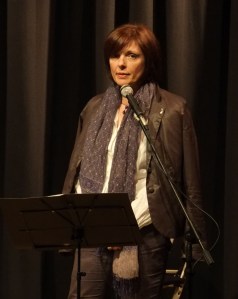
    fiona bolgerFióna Bolger’s work has appeared in Southword, The Brown Critique, Can Can, Boyne Berries, Poetry Bus, The Chattahoochee Review, Bare Hands Poetry Anthology, The Indian Muse and others. Her poems first appeared in print tied to lamp posts (UpStart 2011 General Election Campaign). They’ve also been on coffee cups (The Ash Sessions).

     
    Her grimoire, The Geometry of Love between the Elements, was published by Poetry Bus Press in 2013. Her work has been translated into Irish, Tamil and Polish reflecting the journey her life has taken.
     
    She is a facilitator at Dublin Writers’ Forum and a member of Airfield Writers. She works as a creative mentor with Uversity MA in Creative Process. She lives between Dublin and Chennai.
     
    from The Geometry of Love Between the Elements (Poethead)
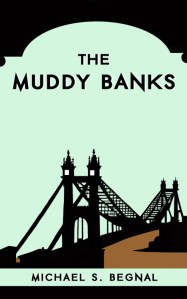
  • Excerpts from ‘The Muddy Banks’ by Michael S. Begnal

    May 19th, 2016

    Uptown

     
    1.
     
    Yellow and crimson leaves, the sidewalks and streets,
    leaves of vines clinging to tree trunks
    and brick buildings, concrete staircases overgrown
    with weeds and roots—
     
    vines cling on tree trunks, brick buildings are
    concrete things, dwellings of a dead mind,
    dwelling-places of a vanished mind
    that stained such things as this—
     
    dwellings of a vanished mind, saw someone,
    saw things, broken windows, crimson leaves,
    mansards, toilets whose porcelain is stained
    and rough, whose water ran—
     
    broken windows saw the concrete staircase below,
    its iron handrail rust like leaves,
    its steps buckled and cracked with roots and weeds,
    hacking coughs—
     
    window broken to the cold, saw someone hacking
    over the porcelain stained rough like leaves,
    a mind vanishes, someone vanishes
    in a cold apartment where the toilet runs—
     
    a dwelling-place is empty but of concrete things,
    broken panes, a toilet’s porcelain dry and rough,
    a mind has vanished down a concrete staircase,
    across the highway, to the cold river
     

    Uptown

     
    3.
     
    Snow on one of the two
    blue steel arches
    of the Birmingham Bridge
    blue-green, white, and splattered
    with rust, the snow sour curdled milk
     
    sheets of broken ice
    floating in the Monongahela,
    pieces accrued together
    in frozen geometries
    of white-grey on grey-green
     
    empty trees de-veiled,
    the South Side hills in snow, and
    from beyond that distance,
    from beyond the hills,
    from beyond other ridges,
     
    announcement, an announcement:
     
      I bring news,
      a stag lows,
      winter snows,
      summer has died
     
      high wind cold,
      sun is low,
      short its track,
      river a riptide
     
      the ferns all red,
      a shape concealed,
      a goose rises,
      ancient its voice
     
      cold takes hold
      of birds’ wings:
      a time of ice
      is my news
     
    These excerpts from The Muddy Banks (Ghost City Press, 2016) are © Michael S. Begnal,

    Note: “Uptown” section 3, lines 17-32 (beginning with the line “I bring news” and continuing through “is my news”), is my translation of an anonymous 9th-century Irish poem beginning “Scél lemm duib. . .” (which also appears on a t-shirt made by An Spailpín Fánach).


    ⊕ Purchase Link for The Muddy Banks by Michael S. Begnal


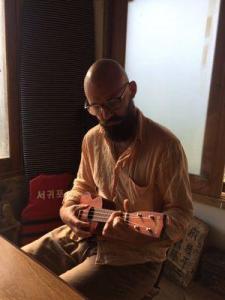
    Mike S. Begnal Michael S. Begnal has published the collections Future Blues (Salmon Poetry, 2012) and Ancestor Worship (Salmon Poetry, 2007), as well as the chapbook Mercury, the Dime (Six Gallery Press, 2005). Formerly editor of The Burning Bush literary magazine and formerly longtime Galway resident, Begnal’s work has appeared in numerous journals and anthologies and has been nominated for a Pushcart Prize.
    Contacts for Michael S. Begnal:

    •  www.mikebegnal.blogspot.com
    • https://twitter.com/Michael_Begnal
  • ‘I wanted to tell you, but there was no time’ and other poems by Csilla Toldy

    May 10th, 2016

    Kitchen

     
    With hot chilli in my eyes
    I read between the lines,
    a coded message of noises:
    A child’s scream sheathed in wind blasts,
     
    gashes through the cracks.
    The mandalay porcelain clock, riveting,
    ticks between my shoulder blades.
    I carry my life like a snail.
     
    The fridge sighs,
    a boiler roars into motion,
    it broils the oil of the seas and heats
    – my place, the kitchen at dawn.
     
    Clouds scrub the stratosphere with desert sand;
    a mad dog, stuck in fear, just shrills.
    The river at the bottom of our glen,
    shushing its song, cushions our senses.
     
    In my body’s kitchen
    the heart spins unrelenting.
    Organs send impulses talking to each other.
    “Thanks for the parcel, we enjoyed the food.”
     
    The universe of enzymes awakens,
    matter is transformed, vibrations vocalise.
    My body is gauze, from Gaza, letting through the particles
    of light – staunch at covering the wounds, so absorbent.
     
    Beyond its wonders I remember
    last night’s cosmic dance at this table,
    our conversation about intelligence and order
    and that we are bacteria in God’s body.
     
    First appeared in Red Roots-Orange Sky, Lapwing Publications, Belfast edited by Dennis Greig
     

    Danube – Duel

     
    Is that a boat or a coffin
    bobbing up and down on the river
    framed by the intricate lace of the parliament?
     
    The country taught me hate
    the tightness of place, sometimes echoed
    when the gales gather and attack this island.
     
    No escape, lie low, let the winds blow overhead,
    wait, even if you are sitting on a hot spring
    even if you fume vitriol.
     
    Remembering the river’s bank
    ragged lines of men and women, shot
    after they were told to slip off their shoes.
     
    Boney bare trees reach up into the sky
    grab the pain – hanging on
    pulling it down, draw it deep into the soil.
     
    The Danube splits the land. From the crack
    incredible amounts of fresh water, hot and clear
    bubble up with the smell of rotten eggs.
     
    Healing waters – they say –
    good for the bones and joints,
    the ailments that plague the core of the nation.
     
    The Jews that never got buried
    float away into the sky – in the spas soaking
    people play chess in sulphuric silence.
     
    First appeared on Poetry24 edited by Martin Hodges
     

    I wanted to tell you, but there was no time

     
    In my dream I had to take the key to your flat and leave it there
    It was very hard to do
    I had to balance on steep rocks and loosened iron hoops
    In my thoughts I tousled your hair and something lifted me up
    A force – and my stomach jumped into my throat.
    I was laughing, for this was what I wanted.
    Then it was over – (some new dream, new convolutions began about
    a girl who dived into the awesome blue of the sea –
    Cassandra – I was glad that she left me alone
    Like a sunset, her blonde locks sunk into the sea)
     
    I was thinking about symbols on my way to you near the southern railways
    And my stomach was in my throat.
    Arriving, I felt the usual little pain, you said I was beautiful
    and I believed you. There was no doubt about it – I could love
    You as it was good for me. We were standing at the glass panels
    In front of us the space
    I did not tousle your hair, there was no embrace, although desired
    I left, I was in a street again and a force lifted me up –
    the one that was leaving dragged me with itself.
    I was a weak woman then, tiny and the struggle with my own power
    Seemed ridiculous. I let it fall into the void.
     
    First appeared in A New Ulster edited by Amos Greig

    Broken – Winged

     
    The first time I heard your voice on the line
    defensively bored, I thought my pleading
    rendered me powerless. But surprising:
    It was the key to your poor, broken heart.
     
    I admired the splinters: Twisted sky,
    land, barbed wire manifold reflected,
    Medusa eyes flash, piercing the sadness,
    but whirls of winds carry us to new heights.
     
    I believed in me being your healer –
    making you whole a possibility.
    Wanted to be the cohesive matter,
     
    Superwoman with the magical torch,
    blind to your pain’s artful prosperity –
    to the cage of guilt and cunning reproach.
     
    First appeared in Red Roots-Orange Sky, Lapwing Publications, Belfast edited by Dennis Greig
     

    Photo by Alistair Livingstone
    Photo by Alistair Livingstone

    Csilla Toldy was born in Budapest. After a long odyssey in Europe she entered the UK with a writer’s visa to work on films and ended up living in Northern Ireland in 1998. Her prose appeared in Southword, Black Mountain Review and anthology, Fortnight, The Incubator Journal, Strictly Writing and Cutalongstory. Her poetry was published online and in print literary magazines, such as Snakeskin and Poetry24, Savitri, Lagan Online, Headstuff, Visible Verse, A New Ulster and in two chapbooks published by Lapwing Belfast: Red Roots – Orange Sky and The Emigrant Woman’s Tale. Csilla makes videopoems, available on her website:  www.csillatoldy.co.uk &  https://soundcloud.com/ctoldy

  • ‘Sonnet From A Derelict House’ and other poems by Daniel Marshall

    May 3rd, 2016

    metamorphosis

     
    gulls bathe & fish in temporary rock pools
    near the recycling spot in ongpo village. i wonder
    if the dead mermaids of old jeju are reincarnate as gulls?
    whether they thank the wind for bringing morsels of food to them?
     
    have they returned to the place they liked to forage abalone,
    where they taught their children how to recite the poems of the sea
    & laced a 1000 soups with shell fish & sea weed?
    in the translucent pools objects that don’t belong to the sea
     
    but the sea has made ornate on its potter’s wheel
    lie like artifacts waiting to be raised from the dead.
    you can hardly recognize shards of green bottles,
    broken, budget china plates, the flutes & spouts of blue vases
     
    & their bases with the artists name erased by the currents.
    but a saucepan lid, the nipple of its handle.
    a rusty tobacco tin with mushed up cigarettes inside.
    a bottle of washing up liquid. a cement bag collecting shells & kelp
     
    go unchanged. no matter
    the hours the mad sea potter clocks in.


    the pacific

     
    we walk 1 km or so,
    pass through gangjeong village,
    away from where ajummas
    who look like permed mussolinis,
    gut & flense red porgy & barter
    at the pitch of cash registers, on the street corner.
    beyond the outskirts
    where the abandoned banners of protest
    against the construction of a naval base is stationed,
    to where the pacific ocean is being itself.
    the land emptied. the roads emptied. people emptied.
    the ocean here moves the mood to its own way.
    & we are moved with it too.
    because we are people.
     

    jeju church

     
    the telegraph cables wobble like plucked harp strings.
    i follow them to a church: the modem of god.
    the fastest router to his love & law.
     
    i doubt they get a decent signal there;
    therefore anxiety’s doppleganger cowers behind the plastic pews,
    in a church, without nave or apse; persistent
     
    their’s is a church suitable for gaggling wants to god.
    the neon crucifix where the lightning rod should be picking petals of dark
    to save the air conditioned congregation from the godless element.
     
    the don’t see that the weather is god, their livelihood.
    they don’t see out there is all god can be
    & the only place he might find comfort from the grind of his silence.


    눈 = snow & eye

     
    this blizzard two days deep is an anomaly
    : it hasn’t snowed like this for 35 years.
    the island’s comatose yet comfortably delivered from
    the common arrangements of any old day
    : farmers off the hook with needy furrows;
    disheartened tourists hop scotch 4 dimensions a-z;
    the restaurants full of happy people getting drunk;
    biyang island’s buggered off all afternoon,
    a graphite smudge in the corner of a child’s sketch.
    i feel a perfect ease in this seraglio of snow,
    furnished with moving tapestries of conifer & crow.
    litters of onion & cabbage, the brown flame
    of decay like the edges of old manuscripts
    spreading to the whorls & cores.
    the harem wenches shaped like soil who swaddled them,
    who with familiar cuddles warmed
    their spindly legs until the autumn harvest,
    look bored without their motherly duties.
    there isn’t a soul & if there was
    a barrier of snow rushes between us.
    flocks of sparrows navigate the drift,
    the traffic of currents & pockets of gale
    quiff the snow on the ridge ahead.
    i hope i never find time to return to the world.


    sonnet from a derelict house


    the village houses dumb with old age. blind & windowless of their worth.
    their pipe-orifices blow off excess steam. asbestos hunkered in their heads.
    a few roof tiles absent : old storms popped them off like champagne corks.
    cut short like children who are seen but never heard. downcast & diffident.
    they mime their rantings at a generation that admires but does not fix.
    they had an idiolect arrested by indifference & so they do not croak
    objections to invasive mainlanders with café aspirations.
    they’ve busied themselves like a mouth chock full of ginseng sweets
    so long, they forgot the peal of beauty poking from their grout,
    the saturating mold that sticks them together. you’ve not decided you have value yet.
    when the aesthetic nuances of apartments lie in tatters: when the weathered marks,
    the petroleum foot prints & ichor rust begin to tell on iron bones & fiber glass skin
    they’ll hurry back to you with a lick of paint, stucco & warm sibilant love,
    their guests will write on post-it notes they are too guilty to compose themselves.

    fish lady

     
    the jeju grandma who squats outside the chiropractor
    sells gold bream, kelp & mackerel piled in little blue baskets.
    the lamppost is her backrest, the pavement is her chair.
    her back’s bent like an oreum. she must be in a lot of pain.
    most of the day she naps with the fishes. i never saw her sell a thing
    & i can’t cook fish in the café : it makes a dreadful stink.

    the air in hallim town is thick with salt & brine.
    it comes from the sea hidden in netted hauls of jeju cuttlefish
    -red freckled tentacles like broken fingers & heads like bone china vases.
    her bones are rusty as a trawlers’ nuts & bolts.
    her knuckles have been bleached with salt & cold.
    she’s wrapped up in a microfiber blanket, she has no gore-tex clothes.

    her veins bulge out of tissue flesh, like highways on a map,
    the luggage of her grueling years drags under her eyes.
    after working seven days a week, outdoors in the fields,
    or on the wet street, since she was a teenager,
    the elements have buffeted her geography’s shape inside & out.
    we can travel her hardships without a compass needle.

    there is no son or daughter to help her lug the stock.
    she has mothered. be sure of that. suckled & smacked them into citizens.
    they’ve been consumed with seoul’s nightly attractions: pork & soju.
    disfigured by charts & indexes, the etiquette of the salary man
    : the boss says drink! we say how much? the boss says jump! we say from where!
    if only she’d not shamed their island roots they’d be less corpulent.

    on sunday all the shops & vendors on the street stop trade.
    she goes to church & tends the spirit then goes home to tend the soil.
    she has a little garden behind her little house beside the sea.
    she grows a row of cabbages, spring onions & garlic
    : in autumn for the umpteenth time she’ll make kimchi for the year ahead
    : the fuel for her to endure one more ring of seasons in the harbour town.

    one day, i’ll go to the chiropractor & she won’t be outside
    & her fish will not have been caught & birth prodigious shoals.

    Daniel Marshall is a poet from England who now lives in Jeju Island, Korea, where he runs a café & guesthouse, which he built with his wife from the soil up. He is an emerging writer who, when he manages his time well, writes & blogs. You can read several of his ongoing projects here & a number of articles he wrote on dream psychology & analysis whilst he lived in the mountains of mainland Korea. Feel free to contact him anytime through his blog:
     
    https://danielpaulmarshall.wordpress.com/
    or at danielpaulmarshall85@gmail.com
     
    Sonnet From A Derelict House and other poems are © Daniel Marshall
  • the subtle flavouring of fish // C. Murray

    May 1st, 2016
    teserrae of names
    dull mustard
    fiery gold flames
    organics of mushroom tea
     
    gaudy/ Gaudi/ lace/ paste
    St Audrey/ rust/ blood/ lace
    yes, tawdry lace
     
               -I can use that
     
    round and round
    the mulberry bush
    oranges/ bees/ fish/
    old chain letter/ old
    poems stuck together/
    spermed-together/
    cum-came/ come on!
     
    books published
    unaltering of anything/
    but the subtle flavouring of fish – maybe
     
    dom/dominatrix/domestic goddess/
    GOD !
               this girl’s great in the kitsch-en
    cook-stuff/ cock-stuff //really // cock-stuff/
     
    who knows
    what goes
    on where the
    rosey-poesie
    poetry muses lie ?
     
    butterfly-netted the
    bee-priestess/poetess
    black veiled butterfly-swoop
    unguarded ungirded/
    girdled //corsetted//cosseted
     
    our bee-keepers are impotent
    poetess/priestess jiggle your
    tits /make soup/
     
    and I thought /
                            I need more meat than this to feed my brain,
     
    words of madness /of bloodletting/
    vein of salts/salts in the blood-wounds/
    of those who … (know)
     
    lady take my hand/
    let us go to the bare
    birthing room/ the death-room/
                     the room of whispers/screams/
    some agony of death is here/
    clean kitchens /jeyes fluid/
    orange savlon/salted wounds/
     
    //cif //blood//
    eggs//
     
    ANYTHING …
    but spare me the details for the subtle flavouring of fish – please
     
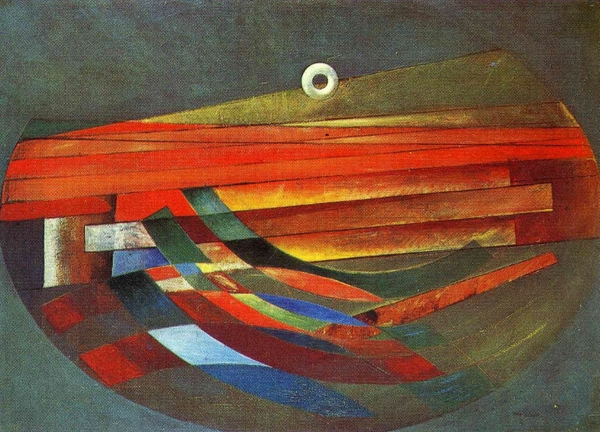
    abstract paintings surrealism artwork german traditional art max ernst surreal art 1455x1050 wall_wallpaperswa.com_37© Christine Murray &  first published in Colony Journal.Image by Max Ernst
  • A Good Question: Anna Akhmatova (1960)

    April 30th, 2016
    Could Beatrice write with Dante’s passion,
    Or Laura have glorified love’s pain?
    Women poets – I set the fashion . . .
    Lord, how to shut them up again!
     
    by Anna Akhmatova: 1960

    Someday we may understand why the blatant copying of Ted Hughes’ & Heaney’s inspiration is acceptable to the Irish Poetry Editors who publish and award it as if it were something new ?

  • “Fintona” and other poems by Aine MacAodha

    April 30th, 2016

    Windowless church

     
    My church has no windows
    in fact it has no doors either
    and to be fair no altar
    it has no ordained minister
    or priest or gospels.
    Its in my heart, in
    the starry sky
    the moon shining over the land
    its the planets in our solar system
    the sun when it shines or not
    its the foods god/creator
    left us, berries, leaves, nuts
    my church has winter winds that
    cut to the bone and to enlighten
    I have the sweet smell of roses
    as I follow the seasons.
    It is bog cotton waving on an
    early Autumn evening as the
    sun bids farewell.
    On nights like these
    dark and Irish wintery
    the familiar trees and hills
    become ancient septs
    ready for battle with the ether.
    Fields caped in winter fog
    appear as crafted cities of the dead
    souls roam among the rushes
    in search of utopia or a home.
    Trees scan the darkened horizon
    the wind calls out names too and
    winter hangs around like a threat.
    This is my church.
     

    Distractions

     
    It’s the end of April.
    Spring late this year
    begins its infinite ascent
    to the tips of the cherry tree
    birds come by often
    a come-all-ye in the front garden
    their songs reach an inner place
    like listening to Franz Haydn
    his strings reaching out
    from centuries past making clear
    contact in a podcast
    channelling his toils and efforts
    an artist whose initial struggles
    with mind, soul, pocket
    rise and fall with each
    strike of the bow
    altering my thoughts on outer things
    a distraction, like the bird song often
    heard in my childhood estate longing
    for far flung horizons.
     

    Stone circle alignments

     
    They invite soul connection
    invoke an energy of some sort
    long past histories underfoot.
    Early man was quite the architect
    aligning the stones in such a way
    that at equinox and solstices
    sun rises to light up the passageway.
    A seeking brings people here
    an ancient longing that needs met.
    Creevykeel court tomb is a full tomb
    the largest in Ireland.
    Tievebaun Mountain seems to guard it
    shadows come and go with the sunsets.
    we don’t give ancient man enough credit
    for the science they carved into the landscape.
     

    Fintona

     
    Or to give it its’ town-land meaning
    A fairly coloured field.
    A small country town, familiar, friendly.
    one can see the whole shopping street
    from left to right without shifting a foot.
    There is a jewel though
    a hidden forested area
    where a raised fairy fort stands
    once druids conferred their words
    in praise of nature.
     
    There too I find the remains of a
    burnt out wreckage of a car
    perhaps stolen years ago left now for
    mother nature to clear up which she did
    wrapping her briars in and through the doors
    designing the broken glass with her leaves.
     

    Awakening

     
    Sun slants in through the venetian blinds
    dust particles float in the narrow space
    books, a pen, Sundays newspapers
    and a mobile phone cling on the quilt cover.
     
    Its 9.30am Spring has come, crisp April air
    drifts in from the ajar window, it will soon be
    Summer again, warmth of the sun rejuvenates.
     
    I wander the halls of my mind on wakening
    sieve through last nights dream
    catching broken pieces of a story or place
    and wondering all day if it meant something.
     
    Fintona and other poems   © Aine MacAodha
    These poems have been published in the online journal Episteme, Vol. 4(1), June 2015 under the section IRISH POETRY | Web address | http://www.episteme.net.in/

    Aine MacAodha (1964-2021) was from Omagh North of Ireland, her works have appeared in Doghouse Anthology of Irish haiku titled, Bamboo Dreams, Poethead Blog, Glasgow Review, Enniscorthy Echo, poems translated into Italian and Turkish, honorable mention in Diogen winter Haiku contest, Shamrock Haiku, Irish Haiku, thefirscut issues #6 and #7, Outburst magazine, A New Ulster issues,2 ,4, 27. Pirene’s Fountain Japanese Short Form Issue, DIOGEN Poetry, Argotist Online, The Best of Pirene’s Fountain ‘First Water’ Revival and Boyne Berries. She self published two volumes of poetry, Where the Three rivers Meet and Guth An Anam (voice of the soul). Argotist online recently published ‘Where the Three rivers Meet’ as an E book. Her latest collection Landscape of Self was published by Lapwing Press Belfast.
     
    https://sites.google.com/a/lapwingpublications.com/lapwing-store/aine-macaodha
    http://ainemacaodha.webs.com/index.htm
←Previous Page
1 … 32 33 34 35 36 … 106
Next Page→
 

Loading Comments...
 

    • Subscribe Subscribed
      • Chris Murray
      • Already have a WordPress.com account? Log in now.
      • Chris Murray
      • Subscribe Subscribed
      • Sign up
      • Log in
      • Report this content
      • View site in Reader
      • Manage subscriptions
      • Collapse this bar