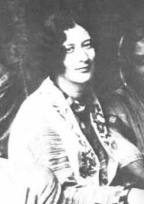
Simone Weil was an outsider, this she clearly stated in her personal letters and essays which are gathered in fragments or in small volumes, such as in Waiting for God. Those meagre fragments that have been published are not really readily accessible save on the curriculums of theological colleges (in modular forms) and presented in a contextualised and safe manner. I do not think that her writings on mysticism have been done justice in contemporary thought.
Weil’s themes are of her intellectual alienation from Catholicism (and her desire of it), poverty, philosophy, war, struggle, and totalitarianism ,
“A collective body is the guardian of dogma and dogma is the object of contemplation for love, faith and intelligence, three strictly individual faculties. Hence almost since the beginning the individual has been ill at ease in Christianity and this uneasiness has notably been one of intelligence, this cannot be denied” (I: 314)
and yet, in further essays on education, philosophy and the need for frontline nurses, Weil rejects civil law as aberrant and only necessary to prevent religious totalitarianism. Her dividedness is a mark of her deep and enduring thought on education and its uses, which can be reduced to the cultivation of attention. Here, Weil’s thoughts could be placed alongside other catholic women thinkers but her refusal of baptism puts paid to that. Her ideas culminate in the magnificent and difficult poetic work, Necessity.
I question why the work of Weil is not put on a par with her contemporary Paschal, or any comparative writer of religious mysticism. I can only imagine that her desire to be an outsider has been readily and promptly answered by those guardians of her letters (thoughts) in their failure to categorise her sufficiently in the annals of the catholic thinking which she so desired and yet so readily and completely rejected,
“Nearly all our troubles come to us from not having known how to stay in our room,” said another sage, Paschal, I think, thereby calling to mind in the cell of recollection all those crazed people who seek happiness in movement and in a prostitution I might call fraternal, if I wanted to use the fine language of my century. ” ( I:314)
I suppose it is difficult if one approaches the writings of a female mystic and powerful writer to safely categorise and apply a workable label to her when her outsider status was so firmly delineated by writing that does not really achieve for the reader a comfort-zone that can be safely and inalienably tagged as pedestrian. She presents a difficulty for those guardians of dogma who would rather not approach the questions of the post war-time era in a manner that may jolt sensitivities in those areas of agnosticism, anarchism, and mysticism discussed by Weil in her letters. There are many such neglects in contemporary thought on issues of philosophy and religion, though mostly they (or their invisibilites) apply alone to women writers of depth and clarity, such as the great Simone Weil. I am excerpting Le Personne Et La Sacré by Simone Weil, in which she develops her ideas regarding the individual cultivation of attention as the most necessary of those approaches to study and whilst I may not agree with her ideas on dogma and justice, I find her constant and integral struggle with the problems of developing the intellect to be almost pressing when so much of post-modernism is directed toward the degradation of the intelligence in favour of willful and negligent consumption,
Le Personne et la Sacré : by Simone Weil
“Beauty is the supreme mystery in this world. It is a brilliance that attracts attention but gives it no motive to stay. Beauty is always promising and never gives anything; it creates a hunger but has in it no food for the part of the soul that tries here below to be satisfied; it has food only for the part of the soul that contemplates. It creates desire, and it makes it clearly felt that there is nothing in it [beauty] to be desired, because one insists above all that nothing about it change. If one does not seek out measures by which to escape from the delicious torment inflicted by it, desire is little by little transformed into love and a seed of the faculty of disinterested and pure attention is created.”
Lo, in my soul there lies a hidden lake, High in the mountains, fed by rain and snow, The sudden thundering avalanche divine, And the bright waters’ everlasting flow, Far from the highways’ dusty glare and heat. Dearer it is and holier, for Christ’s sake, Than his own windy lake in Palestine, For there the little boats put out to sea Without him, and no fisher hears his call, Yea, on the desolate shores of Galilee No man again shall see his shadow fall. Yet here the very voice of the one Light Haunts with sharp ecstasy each little wind That stirs still waters on a moonlit night, And sings through high trees growing in the mind, And makes a gentle rustling in the wheat. . . . Yea, in the white dawn on this happy shore, With the lake water washing at his feet, He stands alive and radiant evermore, Whose presence makes the very East wind kind, And turns to heaven the soul’s green-lit retreat.
by Eva Gore Booth.
( also published the OSG ‘The Whores will be busy’ poem elsewhere, and they were….)
It’s good to see the Dublin Poetry Review onFacebookand online, it’s Heroes Congress is aneclectic mix of writing heroes presented inPDF format and protected by the use of CreativeCommons license, this is what Poetry and innovation is about : accessibility and generosity.There are 99 published poets in the Heroes Congress, I have added a taster below by MairéadByrne, The Men,
by MAIRÉAD BYRNE
“The men stand outside the Dunkin Donuts Center on a cold sunny Novembermorning. They stand in their shirt sleeves, skirted by wall, at the top of a broadsweep of steps. They are smoking and talking. Like men in church porches. Menin dark suits of indiscriminate fit. The pungent smell of damp and rain. Theirloose knot slips further to let me pass. The church by the sea in Kincasslagh.Holding its secret of ordinariness etched in the astringent sublime.”
I am adding in the Dublin Poetry Review Facebook, Homepage and a link to Creative Commons.The CC link has already been discussed on this blog across two posts (and numerous references),so I thought to add those post-links also. Their importance in transmitting materials, whilstallowing artists/editors to manage copyright attribution and derivatives should not be underestimated.
Writers encounter archives mostly, and sound-work is no exception, for instance I encountered UBUWEB whilst researching Celtic mouth Music and Joesph Beuys. Kenneth Goldsmith’s idea to make film, poetry and music available online was sheer avant-gardeism.
I have written about UBUWEB before now here, and I recommend the Poetry Foundation link at the top of this page as an introductory to what has been happening online in terms of dissemination acrossliterary genres.
Other access points include the major US universities who archive readings, the first link of that type included here is of AllenGinsbergreading ‘Epithalamion‘ (ReedEdu)linked in the Threads section, which runs down the left-hand column of the Poethead site, andYouTube. YouTube has a wealth of surprising poetry readings, including the unforgettable first-time I heard SylviaPlathreads ‘Daddy‘ (BBCrecording). I have also added some Bachmann and Schwitters (Anna Blume) on to Poethead, though I must admit to under-using sounds on this site. Poet‘sPages has a ‘Spoken Word’ section, allowing mp3 uploads.
“ After all, Kerouac’s first language was not English, it was a kind of Quebecois called Joual, which is a totally vocal language. He says he heard it from his mother before he learned English.”
Silicon Republic article regarding ‘Radical Copyright Law Reform’ inIreland.
This morning (09/05/2011) Silicon Republic reported on a radical overhaul of Ireland’s Copyright Law, this is interesting given that most discussions in this area have been limited in recent times to the three strikes and you’re out nexus of anti-innovation. I am adding here the current link to the SR reportage, and a couple of links which focus on originators of work and their options in publication . In this case, mostly my focus is on poetry and poetics, as that is what this blog is about.
Poets have been innovating in this area for quite a period of time and have produced documents on fair-use , creative commons and best practices in digitisation and social-media. I consider the issue of copyright (and especially of artist-led discussion in this area) to be of the utmost importance, therefore I have added a permanent link to the Poetry Foundation website onto my landing-page. This page shows at the top of all posts and articles, along with three others which form the impetus of what this blog is about, women-poets (editors and translators),the literary arts, the Universal Declaration of Linguistic Rights, and about the poethead blog.
This morning Minister Bruton said: “I am determined that government will make whatever changes are necessary to allow innovative digital companies reach their full potential in Ireland. These companies make an enormous contribution to jobs and economic growth, and government must do everything it can to allow them to flourish and expand in Ireland.
“Some companies have indicated that the current copyright legislation does not cater well for the digital environment and actually creates barriers to innovation and to the establishment of new business models. Moving towards a US-style “fair use” doctrine is one suggestion that has been made.
“I am determined to respond to these suggestions in a comprehensive and timely manner. It is not wise to make changes to this extremely complex area of legislation without first considering the issues in detail.
“Therefore I have commenced a time-limited review of the law in the area to be conducted by three industry experts. The review will include a full consultation process with all relevant stakeholders, and the entire process will be complete within six months.”
Barriers to innovation at all levels of creative output include the misunderstanding of copyright conventions, or inability to properly utilise such innovations as Creative Commons licenses, which allow artists to set up copyrights (including derivative rights).
Derivatives in poetics include: translations, adaption (incl.musical) pictorial adaptions, film,musical references, translation from (both collaborative/non-collaborative) and quotations from, it is in the nature of poetry to lend itself to innovation. A simple example of derivation is (for instance) Leonard Cohen‘s adaption of Federico Garcia Lorca‘s ‘Little Viennese Waltz‘. (or we could go with Dante!) The adaption would not occur if artistic inspiration were stymied by copyright law that sought to lock-in how a piece of material is used. To this end , I am linking in a discussion regarding digisation, adaption and transmission from the Harriet Monroe institute which is titled ‘code of best practices in fair use for poetry‘ to illustrate how artists are driving discussions in this area of concern. The problems with previous discussions here in Ireland included that the consultation process was limited to big organisations who were perceived as the only stakeholders on the issue of copyright by our previous Govt, and quite ignorantly leaving out the artist/originator’s perspective on derivations.
We cannot forget that the creative arts have many stakeholders who are already concerned in this area and who have created and developed manifestos based on their understanding of the development of original works ! I am adding here an article relating to current Portugese problems , which imo do not take cognisance of the right of the artist/originator to set and maintain their own copyright . The onus is on politicians to read and understand that artists better get the process of creation and adaption, and in order to radicalise from that point, the consultation should necessarily be wide.
Additional Notes , The Harriet Monroe Institute , centre for social media discussion, Portugal to make Creative Commons illegal ?:
“Embracing the overarching value of access to poetry as its theme, the group saw that business, technological, and societal shifts had profound implications for poets publishing both in new and in traditional media, and also that poets have an opportunity to take a central role in expanding access to a broad range of poetry in coming months and years. Almost immediately, the group’s conversation focused on barriers to poetic innovation and distribution caused by clearance issues. Some of these clearance issues develop from the business structures underlying poetry publishing, but a significant number, the group discovered, relate to institutional practices that might be reconsidered, including both poets’ and publishers’ approaches to quoting and other types of possible fair use. Soon after its first meeting, the group began discussing the possibility of developing “best practices” for poets and publishers.“
Reported problems with Creative Commons in Portugal.
“Article 3, point 1 – The authors have the right to the perception of a compensation equitable for the reproduction of written works, in paper or similar support, for instance microfilm, photocopy, digitalization or other processes of similar nature.
[…] Article 5 (Inalienability and non-renunciability) – The equitable compensation of authors, artists, interpreters or executives is inalienable and non-renunciable, being null any other contractual clause in contrary.”
Submissions to the Copyright Review Committee should be sent to copyrightreview@deti.ie or posted to: Copyright Review, Room 517, Department of Enterprise, Jobs and Innovation, Kildare Street, Dublin 2. Submissions should be received by close of business on Thursday 30th June 2011.
Edit January 2012: “Is Ireland about to introduce a law that will allow music companies to order Internet service providers to block access to websites? I rang up the Minister of State at the department of Enterprise, Jobs and Innovation, Sean Sherlock, to find out. “The statutory instrument to be introduced is completely different to Sopa [Stop Online Piracy Act] in America” he told me. “We are simply addressing the High Court judgment handed down by Mr Justice Peter Charleton in relation to copyright law… I will introduce this imminently, by the end of January.” That’s a yes, then … ” from http://www.tjmcintyre.com/2012/01/adrian-weckler-confims-that-irelands.html
Flies have short lice. To hurry is wit in a flurry. Red raspberries are red. The end is the beginning of every end. The beginning is the end of every beginning. Banality becomes all respectable citizens. Bourgeoisie is the beginning of every bourgeois. Spice makes short jokes nice. All women hate mice. Every beginning has an end. The world is full of smart people. Smart is dumb. Not everything called expressionism is expressive art. Dumb is smart. Smart remains dumb.
I was looking for poems based in the Dada era this lovely morning , wishing to publish my favourite one, Anna Blumebut decided to add the above and a link to Anna Blume instead.
My Index of Women Poets evolved from an idea to catalogue published Poethead posts in The Saturday Woman Poet Category (and tags) directly to a special page and thereby increase the visibility and searchability of women poets. I thought to edit the category and to create an index for poets, their translators, and in some cases their editors. Thus both Poethead indices have organically evolved, which will explain their roughness in design.
The Nomadics blog is a wonderful resource for writers, it is concentrated in translations, essays, performance and polemics. Interested readers may take the link as a starting point in their reading. I recommend that they explore the blog wholly, as there are some wonderful links to external sites as well as links to Joris’ own poetic and translation works. The following excerpts are from ‘Poems and Poetics, from Notes towards a NomadicsManifesto ‘ ( External links are attached to the quotes/excerpts below here).
NOTES TOWARDS A NOMADIC POETICS
“A nomadic poetics is a war machine, always on the move, always changing, morphing,moving through languages, cultures, terrains, times without stopping. Refuelling halts are called poases, they last a night or a day, the time of a poem, & then move on. The sufi poets spoke of mawqif – we will come back to this.”
“A nomadic poetics needs mindfulness . In & of the drift (dérive) there is no at- home-ness here but only an ever more displaced drifting. The fallacy would be to think of language as at-home-ness while “all else” drifts, because for language to be accurate to the condition of nomadicty, it too has to be drifting, to be “on the way” as Celan puts it. “
A Nomad Poetics: Essays, published by & still readily available from Wesleyan University Press. Its relevance to our ongoing project on “outsider poetry” should be apparent.”
nomads-by-choice in the welfare of settled rings” Allen Fisher, ‘Dispossession & Cure’.
For me, ‘Relevance’ is a dirty word, it kills the creative impulse and grounds poetry is mechanism.
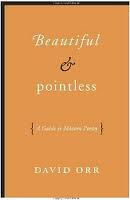
I thought to add a link to the ongoing discussion about relevancy in modern poetry centred in a critique (Huff Post) of Beautiful and Pointless, a Guide to Modern Poetry. Dadaists and Surrealists would rightly cut up and rearrange a book that sought to ask that very question. The greatest injury to poetry occurs in the mind of the poetry editor whose narrow fear informs mechanistic and remedial poetry lists to the unchallenged buyer of books. We live in an era where challenging poetry frightens the would be avant-gardeist editor, which really is deeply ironic.
The question of relevance in poetry is somewhat allied to a misunderstanding of the form and purpose of poetry, form is a moveable feast (there are many poetic forms) and poetry is generally purposeless but never irrelevant. Of course there is the issue of the poetry editor, who being strapped to questions of tradition and relevance, dismisses the breakers of form. For him, the poem is meant to be soporific, safe. It sells that way. A Babel library of undifferentiated journalese in forty line pops construed by the poet MFAer as a doodle on a rainy saturday. Editors that push that pap are more responsible for the loss of imagination than poets who give not a fuck about fitting in. We should be examining how marketing and PR have killed poetry, rather than questioning its relevance. We should be questioning the relevance of the poetry editor who stands between the reader and the poem hocking his tarnished lists like so many damaged goods.
At this point in my brief diatribe, I could cite the works of many writers (unlike Orr), who understand that in order to read poetry, it is necessary to suspend the question of relevance and enter into the poem as it stands in its unique expression; as an object of eternity. Simone Weil encapsulates this idea in a set of essays published by SUNY, entitled Thinking Poetically (ed Joan Dargan).
In Thinking Poetically, there is just one Weil poem, Necessity, this is no accident. Weil, a poet, writer, thinker and philosopher of the Modernist era endlessly wrestled with the issue of futility in poetic expressio , as a result of her experiences in Spain and in Vichy. Her Necessity is a clarion call for poetic clarity and for human triumph against the evils of war, of violence and of poverty. Her notebooks are littered with aphorisms and unfinished thoughts that seek to wrestle with and understand form. The issue of relevance in poetry is never entertained, as poetry for Weil and for countless other poets and artists has been a matter of survival and of questioning. Whilst the reader of Weil, or Celan or Plath may be stupefied by their simplicity in form, they will always react to the poem onthe page which becomes a distilled and profound object of visual art, capable of engaging the reader onmany levels .
Once I heard him he was washing the world, unseen, nightlong, real. One and infinite, annihilated,
Light was. Salvation.
Once by Paul Celan ( Fathomsuns and Benighted, trans Ian Fairley 1991 , Carcanet Books)
Maybe David Orr is correct that Modernist poetry is irrelevant, he would have some support among those people in England and Ireland who have savagely cut funding to independent presses which form the life source of poetry publication, or maybe his treatise on relevance misses the point altogether: beauty of form is not subject to rationalism, we encounter it on a variety of levels, including the spiritual and the intellectual. Far greater minds than his have more successfully engaged with the necessity of poetry reading and writing.
.
David Orr’s critical disenchantment seems symptomatic of an intellectual disengagement with poetry and form Vis poetry as an object of eternity, and thus should be considered irrelevant by those poets who are wrestling with form in technocratic societies wherein the ossification of language is encountered as a mythological death in this his language of modernist critique: one that seeks for relevancy as function (utilitarianism), or as a twee by-product of beauty.
The issue of relevance in poetry, or in any art-form is a relative issue, though one is surprised that a poetry editor should make such a fundamental mistake !
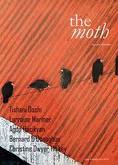
The moth, arts and literature magazine is linked at the end of this short introductory. I picked up my copy at the newsagent at Easons in Heuston station. It proved a very popular read on holiday and I barely got my hands on it. I wondered whether I should just link a poem or mention the art, but like all good magazines, it is how the whole is edited, rather than the plucking from it of tidbits or tasters that makes it work as a publication.
Poems are by Daragh Breen, Paul Keenan, Mairéad Donnellan ,Tishani Doshi , Evan Costigan, Bernard O Donoghue, Helena Nolan, Lorraine Mariner, Peter Fallon and Jessica Traynor.More poems are by Rebecca O Connor, Richard W. Halperin , Andrew Elliot and Niamh Boyce. The magazine is replete with limpid images by Ralph Kiggell, Bill Griffin, Nathalie Lete and Theresa Ruschan. Short fiction, Interviews, and a Shane Connaughton play also form the body of the magazine.
Ember
by Rebecca O Connor.
The sky is the white smoke of a quenched fire, and his heart is loose, poor George. Peppa says he must stay in bed for three years, which is what passes for a weekend here.
My heart too is loose, needs its noose tightened. And just as I say this the sun seeps wetly through to remind me that something smoulders, something still burns.
by Rebecca O Connor
The Moth, cover illustration ‘The Red Shed’, by Vincent Sheridan
” PEN International strongly supports the repeal of Ireland’s Defamation Act of 2009 and an amendment to the Irish Constitution‘s requirement that blasphemy be prohibited under Irish law.
PEN is an organization whose members pledge to promote good understanding and mutual respect between nations and to do their utmost to dispel race, class and national hatreds. We deplore the distrust, disparagement or denigration of any individual based on her or his religious beliefs. We condemn discrimination, threats, harassment, or violence against individuals based on their religion and support national and international prohibitions against such actions. PEN and its member centers are engaged in activities and programs around the globe aimed at reducing religious hatreds and suspicions in the post-September 11, 2001 world.
“We are adamantly opposed to criminalizing speech considered insulting or offensive to religions,” states PEN International President, John Ralston Saul. “Religions are systems of ideas, embodied in institutions and sometimes states. As such, they cannot lie outside the bounds of questioning, criticism and description – the whole terrain of free expression“. Insult and blasphemy laws such as Ireland’s Defamation Act of 2009 clearly run counter to the International Covenant of Civil and Political Rights and other international free expression protections. Moreover, they do little to advance the goal of promoting respect. “



 Chris Murray